
Introduction
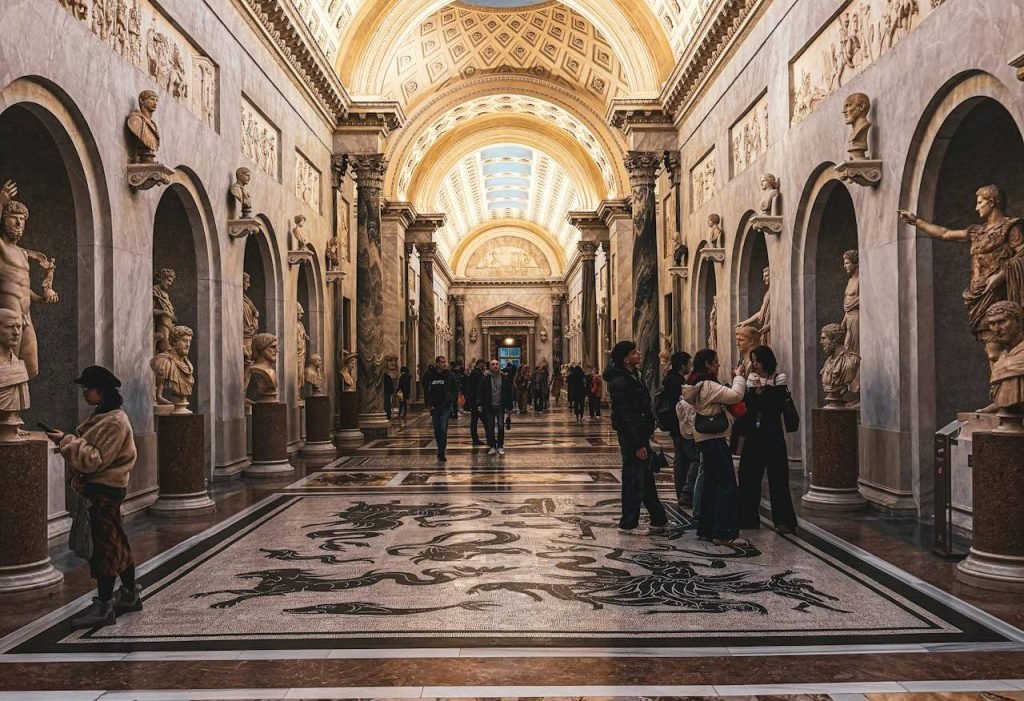
Walk through any museum or art gallery early in the morning before visitors arrive and the environment feels almost sterile. Floors are calm, glass cases shine softly, and the air appears still. Yet inside these quiet spaces there is a constant operational battle that most visitors never notice.
Dust.
In museums and galleries, dust is not simply an aesthetic nuisance. It is a persistent environmental threat that slowly interacts with artifacts, display structures, and building materials. Paintings, textiles, sculptures, and historical documents all respond differently to airborne particles, but the pattern is consistent. When dust accumulates, it introduces abrasion, chemical residues, and moisture retention that can gradually compromise delicate materials.
For facility managers and operations teams responsible for cultural institutions, dust control is not about keeping spaces visually clean. It is about protecting collections, maintaining environmental stability, and preventing long term deterioration that often begins quietly and invisibly.
Understanding how dust behaves inside museums is the foundation of effective maintenance strategies.
Why Dust Damages Art
Dust is rarely composed of a single substance. In most indoor environments it is a mixture of microscopic fibers, pollen, human skin cells, soil particles, pollutants, and organic fragments carried through ventilation systems or brought in by visitors.
When these particles settle on artifacts or display surfaces, several processes begin.
First, many particles are abrasive. Even extremely fine dust can scratch varnishes, protective coatings, and delicate finishes when surfaces are wiped incorrectly. This type of damage rarely appears immediately. It accumulates slowly over repeated cleaning cycles.
Second, dust often contains pollutants that react chemically with materials such as paper, textiles, and pigments. These reactions may accelerate fading, discoloration, or structural degradation.
Third, dust attracts and retains moisture. In environments where humidity control is critical, this can create micro conditions on surfaces that differ from the carefully regulated climate of the room itself.
For museum conservators and facility managers, the problem is not simply the presence of dust. The problem is how dust is allowed to accumulate and how it is removed.
Cleaning practices that seem routine in commercial buildings can unintentionally worsen the situation by redistributing particles or pushing them deeper into sensitive materials.
Where Dust Comes From Inside Museums

Dust enters museum environments through multiple pathways, and understanding these sources is essential for designing effective cleaning protocols.
The most obvious source is visitor traffic. Each person entering a gallery brings particles on clothing, shoes, and personal items. In high attendance institutions across the Bay Area, thousands of visitors may move through exhibition spaces in a single day. Even well maintained entry systems cannot eliminate this constant influx.
HVAC systems represent another major pathway. Ventilation equipment circulates air to maintain temperature and humidity stability, but it also distributes airborne particles throughout the building if filtration and maintenance are not carefully managed.
Building materials themselves contribute to dust generation. Carpets shed fibers. Older wooden structures release microscopic particles. Even new construction materials can generate fine dust during the first years of use.
Finally, operational activities within the building create their own disturbances. Exhibition installation, maintenance work, and routine facility operations can all release particles that migrate into galleries and storage areas.
Because these sources operate continuously, dust control cannot rely on occasional cleaning. It requires structured routines that intercept particles before they accumulate.
HVAC and Air Circulation Challenges
Environmental control systems are essential for museums. Temperature and humidity stability protect collections from warping, mold growth, and chemical deterioration. However, the same systems that maintain climate conditions also influence dust movement throughout the building.
Air circulation creates patterns that can either contain or distribute particles.
If filtration systems are inadequate or poorly maintained, microscopic particles pass through ventilation ducts and settle on surfaces across galleries and exhibit spaces. Even small inefficiencies can allow dust to accumulate in areas that appear otherwise sealed and controlled.
Facility teams often discover dust patterns forming around air vents, display lighting systems, and structural edges where airflow slows and particles settle.
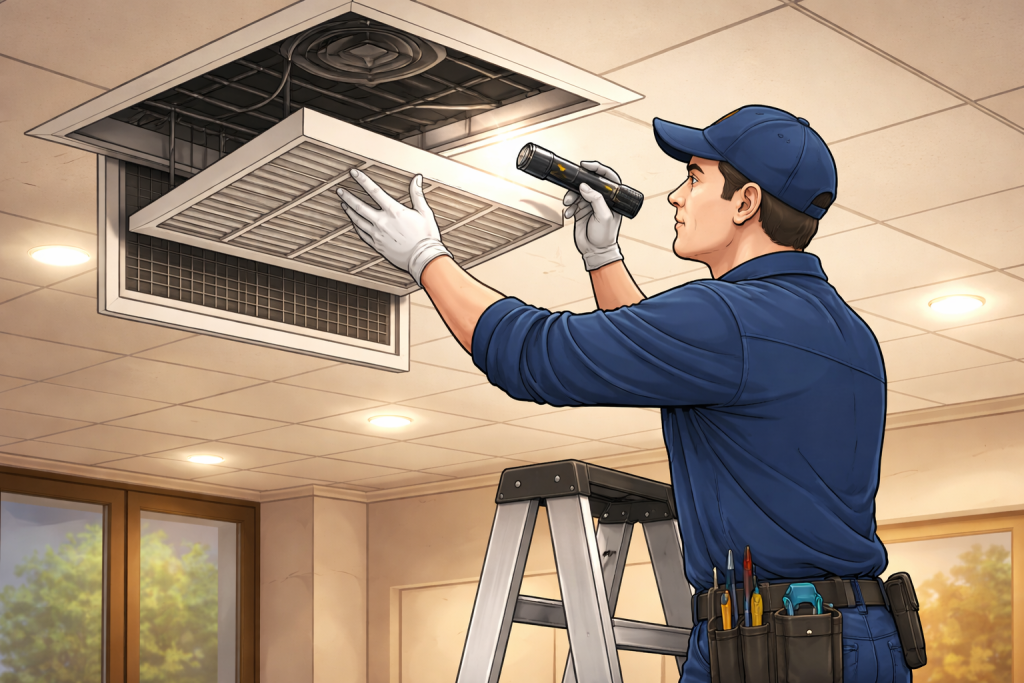
Professional facility maintenance programs address this challenge through a combination of filtration management and cleaning coordination. HVAC systems must be inspected regularly, filters replaced on schedule, and ventilation ducts evaluated for buildup that may release particles into the air stream.
Cleaning teams also adjust their routines to complement air circulation patterns. Instead of simply wiping surfaces, they approach dust control as a coordinated process that captures particles without redistributing them into the environment.
Professional Dust Control Techniques
Dust control in museum environments is fundamentally different from standard janitorial cleaning. The objective is not speed or visible shine. The objective is particle capture without environmental disturbance.
Professional cleaning teams typically approach dust removal using a structured sequence.
Cleaning begins with the highest surfaces, where particles naturally settle first. This prevents dust from falling onto already cleaned areas. Work then progresses gradually downward through display structures, cases, and finally floors.
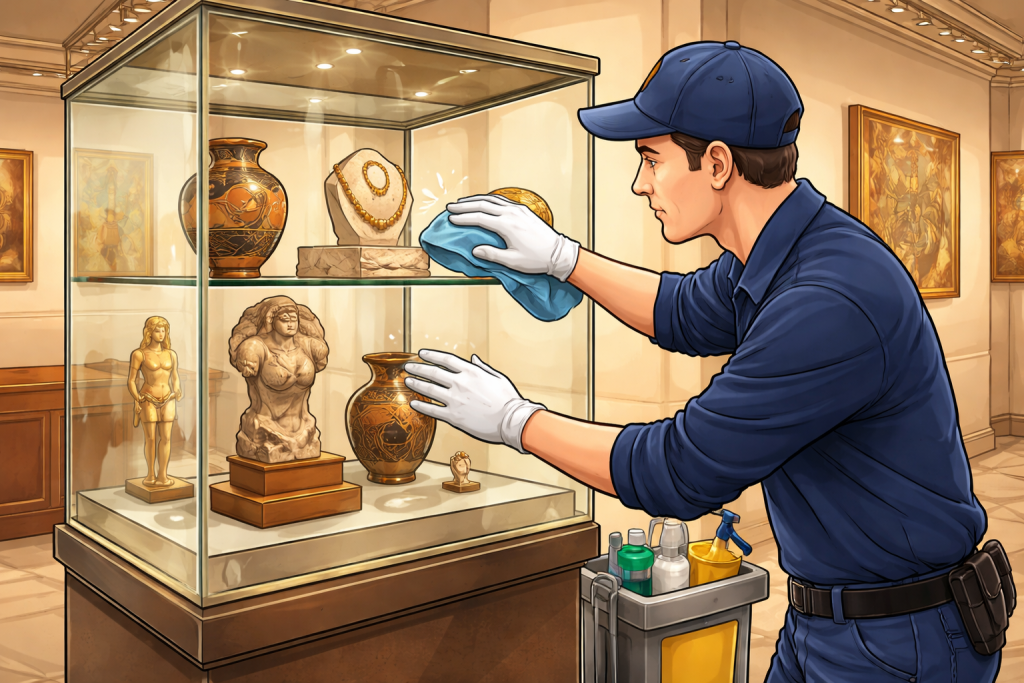
Equipment selection plays a critical role in this process. Tools must capture particles rather than push them into the air. Microfiber cloths, soft brushes, and HEPA filtration systems are commonly used because they trap particles effectively.
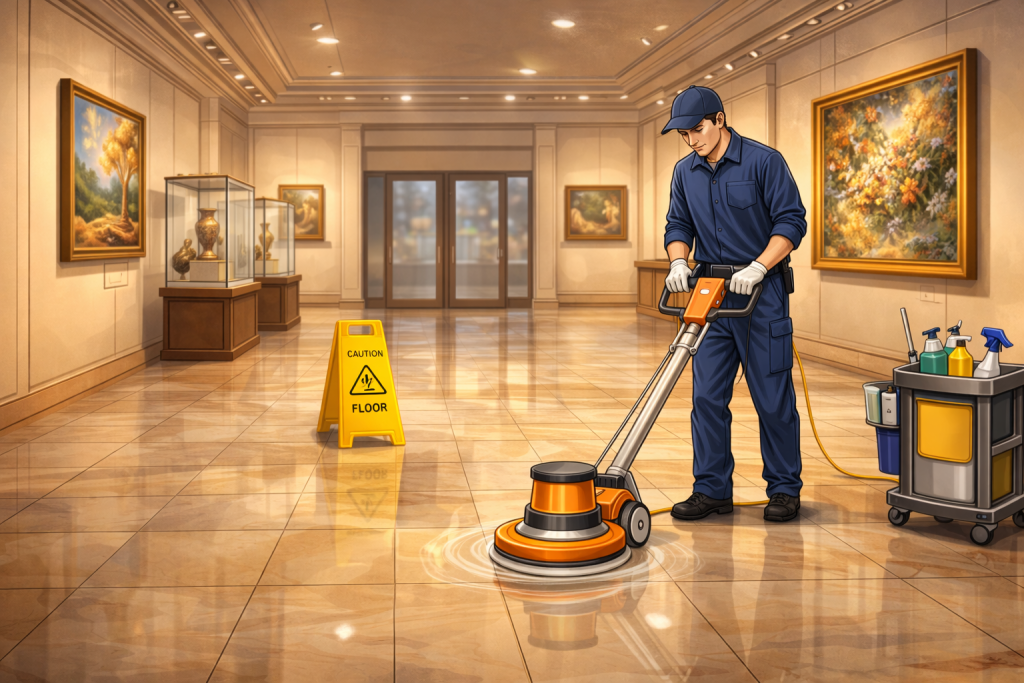
In many cultural institutions, facility teams coordinate dust control with broader maintenance services such as routine janitorial programs, commercial floor care, and periodic deep cleaning. These services work together to reduce particle buildup across the building.
For example, structured commercial cleaning routines help stabilize general facility conditions, while targeted floor cleaning and carpet maintenance remove debris before it becomes airborne dust.
When these services operate within a coordinated system, dust levels remain significantly lower across galleries and public areas.
Microfiber, HEPA, and Low Chemical Cleaning
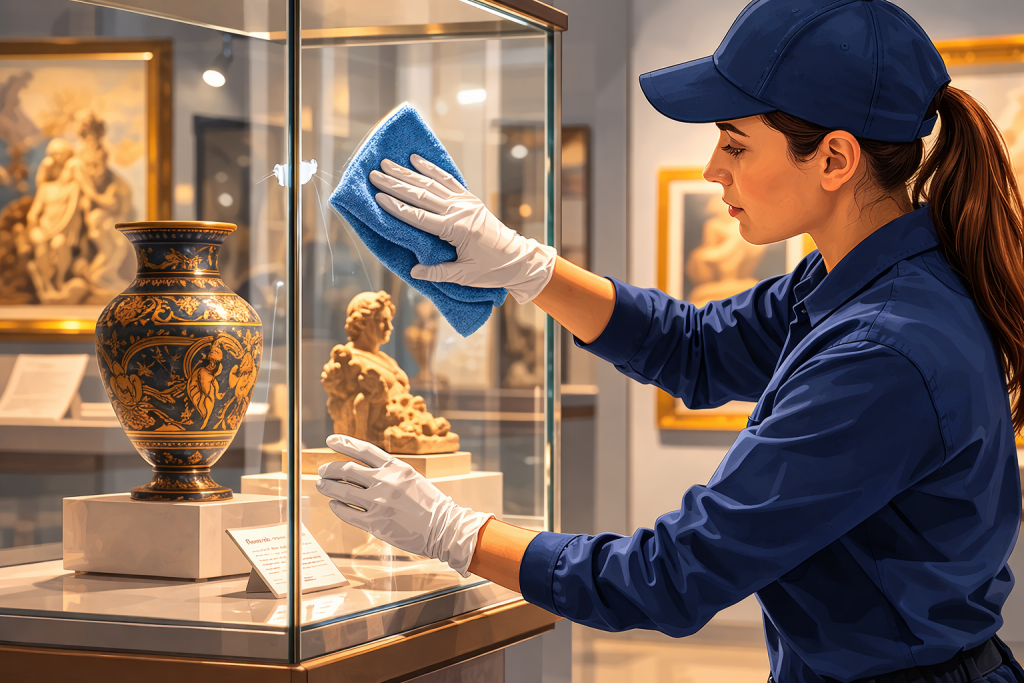
Tools and materials used during cleaning have a direct impact on how effectively dust is controlled.
Microfiber cleaning materials are widely used in museum environments because their structure captures microscopic particles instead of spreading them across surfaces. Traditional cotton cloths often move dust from one area to another, creating the illusion of cleaning without actually removing contaminants.
HEPA filtration systems provide another critical advantage. These filters capture extremely small particles that conventional vacuums release back into the air. In museums, HEPA equipped equipment helps prevent the re circulation of dust during floor cleaning.
Chemical usage must also be carefully controlled. Many commercial cleaning products leave residues that attract dust or interact with sensitive materials. As a result, museum cleaning protocols often emphasize neutral solutions and minimal chemical application.
Companies experienced in commercial facility cleaning typically integrate these tools and practices into their service programs. Routine janitorial services, floor care, and carpet cleaning can all contribute to dust reduction when performed using appropriate equipment and procedures.
The goal is not aggressive cleaning. The goal is controlled cleaning that supports environmental stability.
Preventative Maintenance Schedules
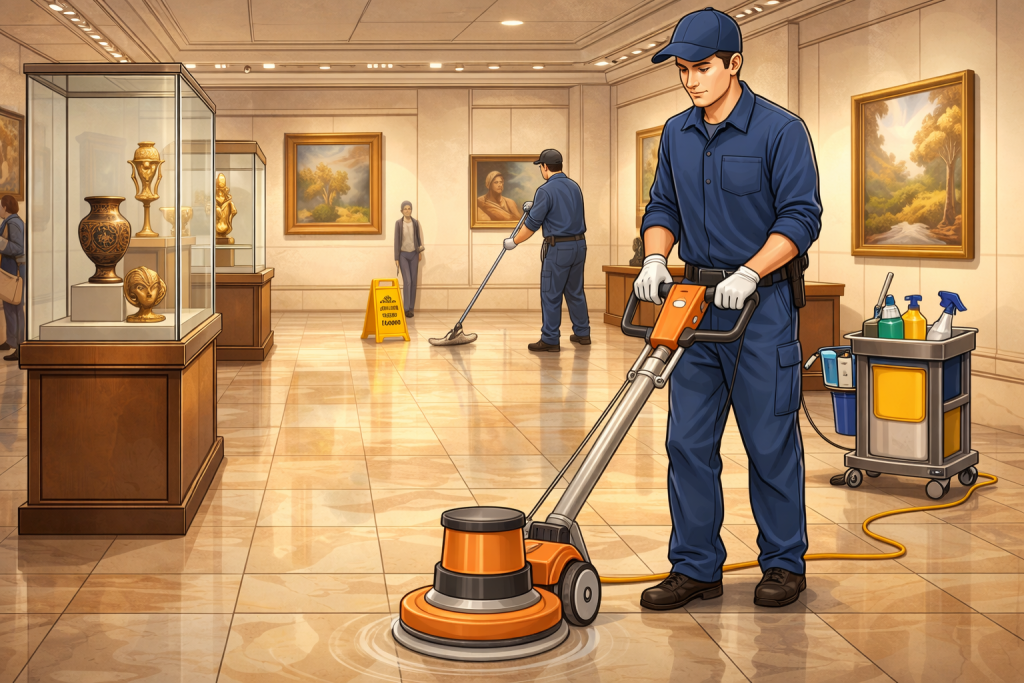
Dust control becomes far more effective when cleaning routines follow a predictable schedule.
In museums and galleries, inconsistent maintenance often leads to cycles of neglect followed by intensive cleaning interventions. This approach can disturb environmental stability and increase risk to delicate materials.
Preventative maintenance focuses instead on steady, controlled routines.
Daily cleaning removes particles introduced by visitors and routine operations. Weekly and monthly tasks address areas where dust tends to accumulate, such as lighting systems, architectural details, and ventilation zones.
Periodic deep cleaning services also play a role in maintaining stable conditions. Services such as professional carpet cleaning, hard floor maintenance, and pressure washing of exterior entry areas help reduce the amount of debris entering the building.
For many cultural institutions, a well structured maintenance program integrates multiple services. Regular janitorial cleaning maintains daily conditions, specialized floor care preserves building materials, and targeted deep cleaning reduces long term buildup.
The result is a stable environment where dust accumulation remains manageable and predictable.
Closing Insight
Dust rarely announces itself as a serious problem. It gathers slowly on surfaces, inside display structures, and along architectural details that visitors rarely examine closely.
In museum environments, this gradual accumulation matters.
Particles interact with delicate materials, influence environmental stability, and introduce long term conservation risks that often appear only after years of exposure. When cleaning practices fail to address these patterns, the consequences emerge quietly through fading surfaces, worn finishes, and increased maintenance costs.
Effective dust control requires more than occasional cleaning. It requires a structured understanding of how particles enter buildings, how they move through ventilation systems, and how maintenance routines capture them without disturbing sensitive environments.
In cultural institutions, the most effective cleaning programs are those that operate quietly in the background, protecting both the facility and the collections it preserves.
Call to Action
If your museum or gallery is evaluating how dust control fits into its facility maintenance strategy, reviewing cleaning protocols with experienced commercial cleaning professionals can help clarify how everyday routines support long term preservaticon.