
The Food Court as the Mall’s Trust Test
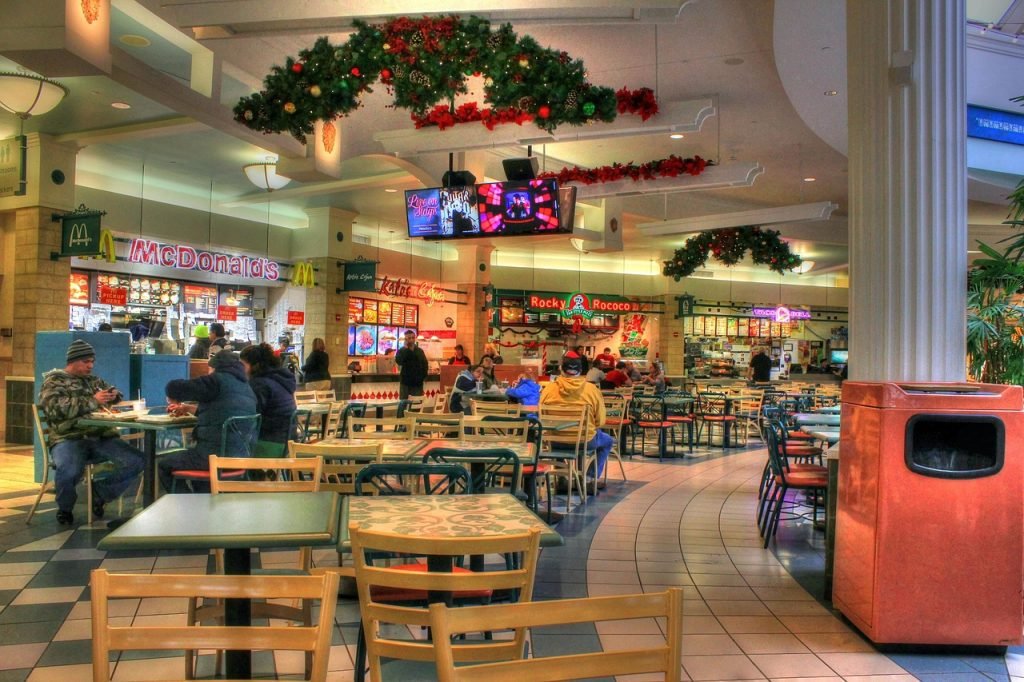
For many shoppers, the food court is not just a place to eat, it is where the mall’s promise is tested. Customers may tolerate crowded stores, long lines, or limited seating, but they rarely forgive visible dirt, sticky tables, overflowing trash cans, or food debris left behind by previous guests.
The food court is where families sit down, where workers take lunch breaks, where teenagers gather, and where elderly visitors rest. It is one of the few shared spaces where people stop moving and begin observing their surroundings closely. Every surface becomes part of the experience.
When tables are messy, chairs are stained, or trash is visibly overflowing, the message is immediate and visceral. This place is not being cared for. The perception spreads quickly from the food court to the entire mall, regardless of how clean individual stores may be.
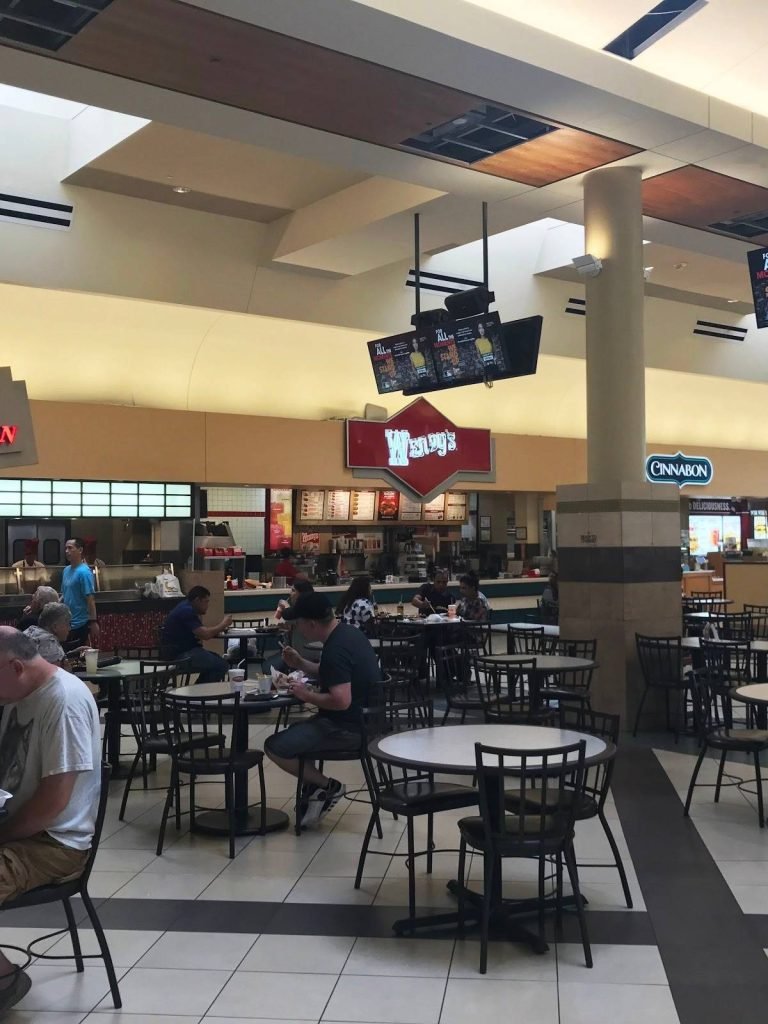
In the Bay Area, where consumers are especially sensitive to hygiene, health, and overall quality, this perception can be costly. Cleanliness is no longer assumed, it is evaluated continuously.
Cleanliness Is No Longer a Background Function
Historically, mall cleaning was treated as a behind the scenes operation. Crews worked early in the morning, late at night, or after closing hours. As long as the space looked acceptable at opening, the job was considered done.
That model no longer works for high traffic food courts.
Food courts are dynamic environments. Trash accumulates within minutes. Tables turn over rapidly. Spills, crumbs, and packaging appear constantly. Restrooms nearby experience peak usage during meal times. What looks clean at 10:00 a.m. may be unacceptable by noon.
Bay Area malls face additional pressures. Higher foot traffic density, diverse dining options, health conscious customers, and strict local health regulations mean that cleanliness issues escalate faster and attract more scrutiny.
Static cleaning schedules cannot keep up with real world usage. What is required is active, visible, and continuous maintenance.
The Silent Revenue Impact of Dirty Food Courts
Poor food court cleanliness has measurable financial consequences, even if they are not immediately reflected on a balance sheet.
First, there is reduced dwell time. Customers who feel uncomfortable cut their visits short. They eat quickly or choose not to eat at all. Shorter stays mean fewer impulse purchases in surrounding stores.
Second, there is lost food court revenue. Shoppers may leave the mall entirely to eat elsewhere. In the Bay Area, alternatives are plentiful, from standalone restaurants to food delivery options.
Third, there is reputational damage. Negative impressions are shared informally, in conversations, group chats, and online reviews. A single comment about dirty tables or overflowing trash can influence future visits.
Fourth, tenants suffer. Food vendors depend on shared seating and common area cleanliness. When these fail, vendors receive the blame despite having little control over the environment. This strains landlord tenant relationships.
Over time, these issues compound, affecting lease renewals, foot traffic trends, and the perceived quality tier of the property.
Overflowing Trash Is More Than an Eyesore
Trash cans filled beyond capacity are one of the most common and damaging food court issues. They signal neglect instantly.
Overflowing trash creates several risks at once. It attracts pests, increases odor, and encourages customers to leave waste on tables or floors. It also creates sanitation concerns that can draw attention from local health authorities.
In busy Bay Area malls, trash volume fluctuates dramatically by hour and day. Lunch rushes, weekends, school holidays, and special events all create spikes that fixed schedules fail to anticipate.
When trash removal is delayed, the problem escalates quickly. One full trash can becomes two, then four. Soon, the entire food court looks overwhelmed.
A proactive approach requires staff who monitor fill levels continuously and respond before overflow occurs, not after complaints are made.
Tables and Seating Are High Risk Touchpoints
Food court tables are among the highest contact surfaces in any retail environment. They collect food residue, spills, grease, and bacteria throughout the day.
Customers notice immediately when a table has crumbs, sticky residue, or leftover packaging. The psychological impact is stronger than many property managers realize. A dirty table creates discomfort even if the rest of the area looks acceptable.
In the Bay Area, where public health awareness is high, customers are especially sensitive to shared surfaces. Many will attempt to clean tables themselves using napkins or sanitizer, but this is not the experience they expect from a professionally managed mall.
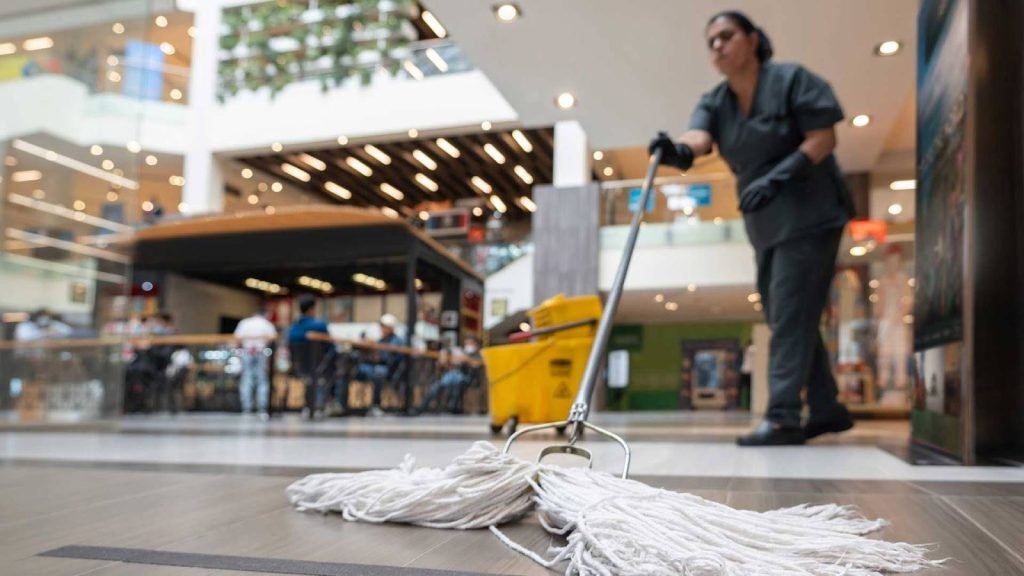
Consistently clean seating areas require constant attention. Tables must be wiped, chairs repositioned, floors spot cleaned, and spills addressed within minutes.
This is not deep cleaning, it is continuous care.
Why Night Cleaning Alone Is Not Enough
Many malls still rely heavily on overnight janitorial crews. While essential, these crews cannot address issues that arise during operating hours.
Food courts degrade continuously. A spotless floor at opening will not remain spotless through lunch, afternoon snacks, and dinner. Without daytime support, cleanliness deteriorates in plain sight.
Night crews also lack real time awareness. They clean based on schedules, not conditions. They cannot respond to an unexpected spill, a broken trash liner, or a sudden surge in traffic.
Daytime cleanliness requires presence. Someone must be there to observe, intervene, and restore order as issues arise.
This is where many properties fall short, not because of negligence, but because of outdated assumptions about how cleaning should be delivered.
The Role of Day Porter Services in Modern Malls
Day porter services are designed specifically to address the gap between overnight cleaning and real time needs.
A day porter is not a traditional janitor working after hours. A day porter is an on site professional whose job is to maintain cleanliness continuously while the mall is open.
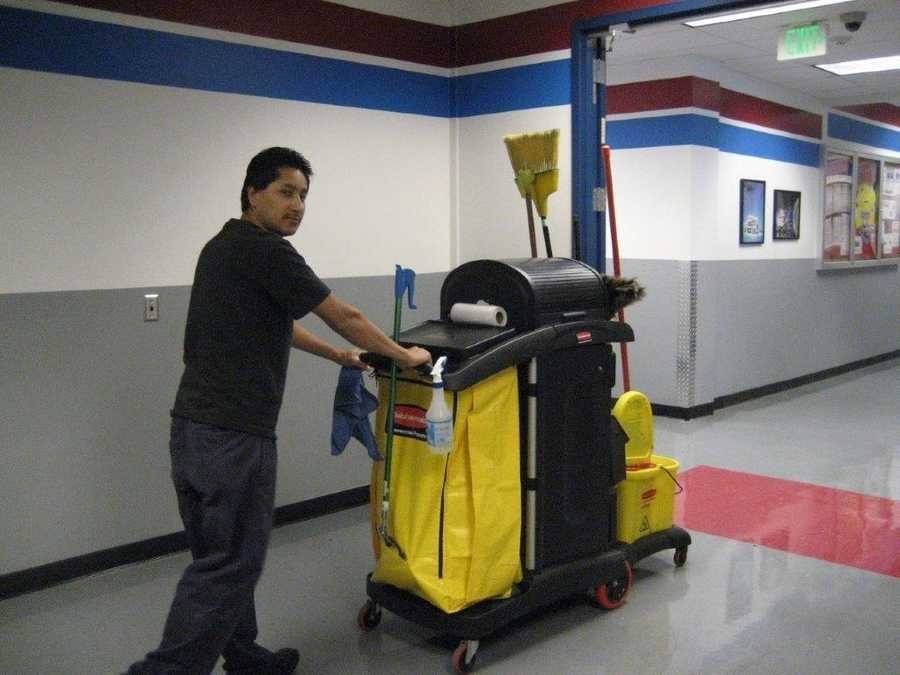
In food courts, this includes wiping tables between guests, managing trash levels, spot cleaning floors, addressing spills immediately, restocking paper products, and maintaining overall order.
Equally important, day porters are visible. Their presence reassures customers that cleanliness is actively managed. Visibility builds trust and reinforces the mall’s commitment to quality.
For Bay Area malls, day porter services align perfectly with customer expectations. They reflect a proactive, service oriented mindset rather than a reactive one.
Cleanliness as Part of the Brand Experience
Malls compete not only with other malls, but with online shopping, lifestyle centers, and standalone dining districts. The experience must justify the visit.
Food courts play a central role in that experience. They are social spaces, rest areas, and revenue drivers all at once. When they feel neglected, the entire property suffers.
Cleanliness communicates values. It signals respect for customers, tenants, and staff. It shows attention to detail and operational discipline.
In contrast, visible mess sends a message that shortcuts are being taken. That message conflicts with the premium positioning many Bay Area malls aim to project.
Investing in continuous food court cleaning is not a cost center decision, it is a brand protection strategy.
Operational Benefits Beyond Appearance
Day porter services offer benefits that extend beyond aesthetics.
They reduce slip and fall risks by addressing spills promptly. They improve compliance with local health and safety standards. They reduce the burden on overnight crews by preventing excessive buildup.
They also provide eyes and ears on the floor. Day porters often identify maintenance issues, damaged furniture, or unsafe conditions before they escalate.
From an operational standpoint, they act as a flexible layer of support that adapts to real time conditions.
This adaptability is particularly valuable in the Bay Area, where foot traffic patterns can change rapidly due to weather, events, or transit disruptions.
Why This Matters More in the Bay Area
Bay Area consumers are discerning. They expect clean, safe, and well managed public spaces. Many work in industries where standards, processes, and user experience matter deeply.
They also share experiences quickly. A single negative impression can influence dozens of potential visitors.
Additionally, local health regulations are strict, and enforcement is active. Visible sanitation issues increase the risk of inspections, warnings, or worse.
For mall operators, maintaining food court cleanliness is both a customer experience issue and a risk management issue.
Those who address it proactively gain a competitive advantage.
A Professional Approach to Food Court Care
Effective food court cleaning requires more than occasional attention. It requires a system.
That system includes scheduled patrols, clear response protocols, properly trained staff, and accountability. It also requires coordination with tenants and property management.
Professional day porter services are structured to deliver exactly that. They integrate seamlessly into mall operations, working quietly but visibly to maintain standards throughout the day.
They allow property managers to focus on leasing, marketing, and operations, knowing that cleanliness is being handled consistently.
Final Thoughts for Mall Decision Makers
A messy food court is never just a minor inconvenience. It is a signal that something is broken in the operational model.
Customers notice. Tenants feel it. Brands are affected.
In the competitive retail environment of the Bay Area, these details matter more than ever. Cleanliness is not optional, it is foundational.
Malls that treat food court cleanliness as a strategic priority position themselves for stronger foot traffic, happier tenants, and better long term performance.
Call to Action, Keep Your Food Court Working for You
If your mall struggles with messy tables, overflowing trash, or inconsistent daytime cleanliness, it may be time to rethink your approach.
New Revolution Cleaning provides professional Day Porter Services tailored specifically for malls and high traffic retail environments across the Bay Area. Our teams maintain food courts in real time, ensuring clean tables, controlled trash levels, and a consistently pleasant experience for every visitor.
Contact us today to schedule a walkthrough and discover how proactive daytime cleaning can protect your brand, support your tenants, and elevate your mall’s customer experience.