

Introduction
Every Bay Area hotel operator knows the feeling. You walk the property at noon and notice small things. The lobby restroom is not as fresh as it was at seven in the morning. A coffee cup has been sitting on a hallway ledge for an hour. The elevator floor carries the dust of a hundred comings and goings. None of this is catastrophic. But each small condition chips away at the image the property works so hard to project.
The instinctive response is to push housekeeping harder. But housekeeping was designed for room turns, not for continuous public area maintenance. The real solution is a dedicated day porter service. The challenge is that most operators have never been given a clear framework for evaluating whether they need one, what the role should encompass, and how to integrate it without disruption. This article provides that framework. It is written for Bay Area hotel decision-makers who sense there is a better way to manage their public spaces during operating hours, but who want to think it through before making a call.
The Bay Area Hotel Environment Is Different
Before examining the day porter role itself, it is worth acknowledging why Bay Area hotels face a particular set of pressures. The market is dense, competitive, and expensive. Guest expectations are shaped by high room rates and a professional, international clientele. A business traveler staying in San Francisco, Palo Alto, or San Jose on a corporate rate of several hundred dollars per night expects a flawless environment. They are not forgiving of small missteps because they have a mental model of what that price point should deliver.
At the same time, Bay Area labor costs and staffing challenges are among the highest in the country. Hiring in-house staff for every function is expensive, time-consuming, and unpredictable. Turnover in entry-level cleaning roles is persistent. Absenteeism creates daily operational gaps. Training new hires to the standard a high-end hotel requires is a continuous investment. In this environment, the day porter function becomes not just an operational decision but a risk management decision. Relying on a housekeeping team that is already stretched thin to also manage public areas in real time is asking for inconsistency.
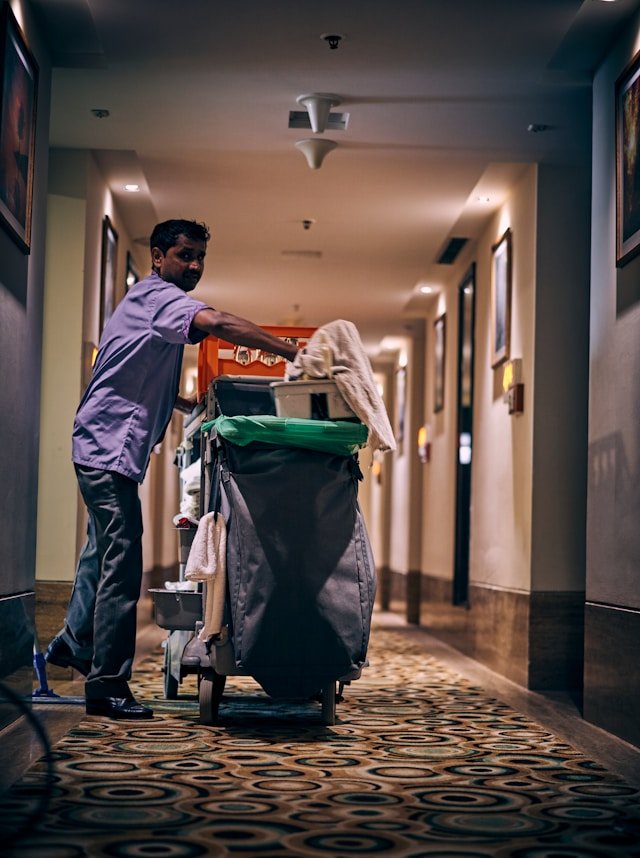
The hotels that perform best in this market have one thing in common: they have separated the function of room cleaning from the function of continuous public area maintenance. They treat them as distinct operational problems requiring distinct solutions. The day porter is the solution to the second problem.
What a Day Porter Actually Does in a Hotel Context
There is a common misunderstanding that a day porter is simply a janitor who works during the day. That definition misses the role’s strategic purpose. In a hotel, a day porter is a dedicated professional whose sole responsibility is to maintain the public-facing environment during operating hours so that the property never appears neglected between deep cleans.
The scope is specific and predictable. It includes lobbies, reception areas, public restrooms, corridors, elevator cabs, fitness centers, pool areas, and meeting spaces. The day porter circulates through these zones on a defined schedule, performing repeated cycles of inspection, cleaning, restocking, and minor maintenance. If a restroom needs attention, the day porter addresses it before a guest registers a problem. If a lobby trash receptacle is filling up, the day porter empties it on the next pass. If an elevator button panel is smudged, it is wiped down without anyone having to request it.
The role also serves as a proactive response layer. Spills, debris, and unexpected messes are handled immediately, not when a guest reports them to the front desk. This prevents the cascade where a single visible failure triggers a guest complaint, which then consumes management time, which then distracts from other priorities. The day porter absorbs these disruptions before they escalate.
What is critical to understand is that the role is not reactive. It is scheduled and cyclical. The schedule is designed around the hotel’s traffic patterns. Morning checkout surge, midday conference breaks, and late afternoon arrivals each receive intensified attention. During quieter periods, the day porter addresses deeper but less urgent tasks. This rhythm ensures the property feels consistently managed at all hours.
The Decision to Bring in a Day Porter Service
Hotel operators do not typically wake up one morning and decide to add a day porter. The decision usually follows a pattern of recurring frustrations. Guest satisfaction scores may be dipping in categories related to public area cleanliness. Management may be spending an increasing amount of time handling complaints that trace back to lobby or restroom conditions. The housekeeping director may be reporting that staff are being pulled away from room duties too frequently. Or a brand audit may have flagged inconsistencies that, upon reflection, all occurred during operating hours.
When these signals appear, the decision is not just whether to add a day porter. It is whether to hire in-house or partner with a commercial cleaning provider that specializes in the service. The in-house route gives direct control over the individual, but it also brings all the associated costs and risks of employment: recruitment, training, supervision, benefits, worker’s compensation, and coverage during absences. In the Bay Area market, where unemployment in service roles is low and competition for reliable workers is intense, the in-house route is often slower and more expensive than operators anticipate.
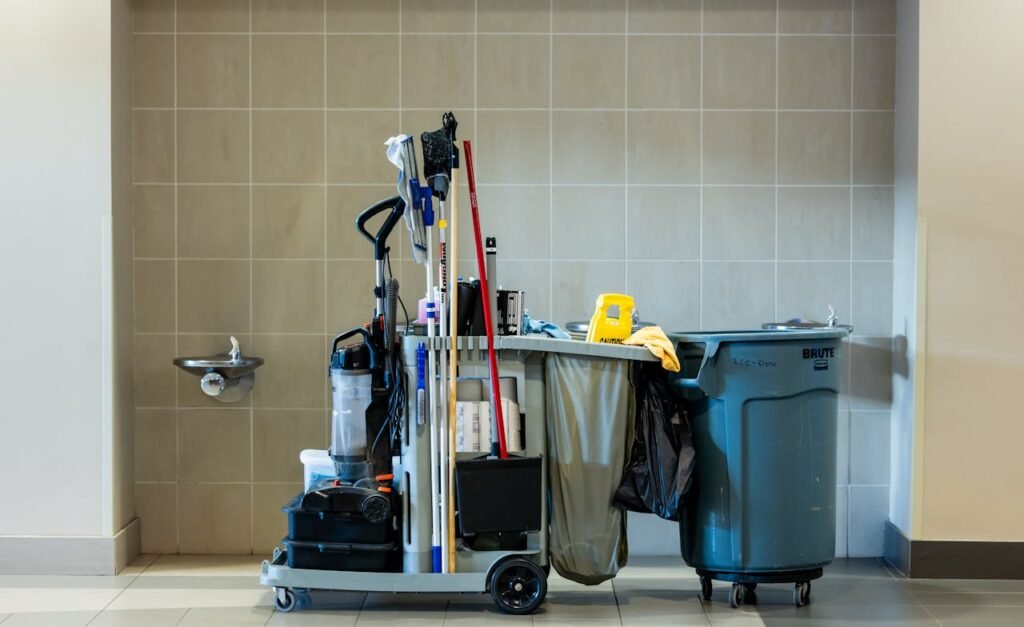
Partnering with a professional commercial cleaning company changes the equation. The provider supplies a trained, supervised day porter. The hotel does not carry the burden of hiring or managing the individual directly. Coverage is guaranteed. If the assigned porter is absent, the provider sends a replacement. The service is governed by a contract with defined scope, schedule, and performance expectations. For many Bay Area hotels, this model converts an unpredictable staffing variable into a predictable operational expense.
How the Service Integrates Without Friction
A legitimate concern among hotel operators considering a day porter service is integration. Hotels are complex ecosystems. Adding an external role can feel disruptive if not handled carefully. But experienced commercial cleaning providers have refined the integration process precisely because they understand these concerns.
The process begins with a walkthrough of the property. The provider meets with the General Manager or Director of Operations to understand the hotel’s layout, traffic patterns, peak hours, and specific pain points. Together, they define the scope of the day porter’s responsibilities. This scope is documented and becomes the operational playbook. Nothing is left to improvisation.
The day porter arrives in a uniform that distinguishes them from hotel staff, so there is no confusion among guests. They bring their own equipment and supplies in most cases. They report to the cleaning provider’s supervisor, not to hotel management, although they coordinate daily with the front desk or housekeeping lead. Their schedule and task list are pre-approved and visible. The hotel team knows exactly what the porter will do and when.
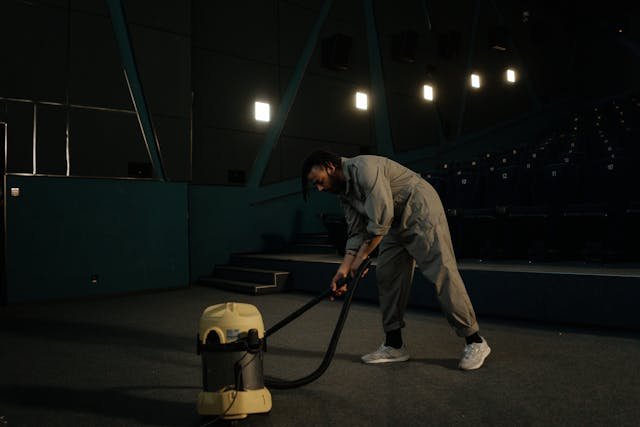
This clarity prevents turf conflicts. Housekeeping knows the day porter is not there to take over room cleaning. Maintenance knows the porter handles small public area issues but escalates anything requiring skilled repair. The front desk knows they have an ally who keeps the lobby and restrooms guest-ready at all times. The integration, when done correctly, reduces friction rather than creating it.
What Bay Area Hotel Operators Should Look For
Not all day porter services are equivalent. For a Bay Area hotel, several criteria matter when evaluating a provider. The first is hospitality experience. A provider that primarily services office buildings or industrial facilities will not understand the pace, aesthetic standards, and guest-facing sensitivities of a hotel. The way a porter interacts with a guest in a lobby hallway matters. The provider should have a track record in hospitality environments.
The second criterion is reliability systems. The provider should have documented processes for ensuring that the day porter shows up on time, every day, and that coverage continues seamlessly if the primary porter is unavailable. Hotels operate every day of the year. The service must be designed for that reality.
The third is clarity of communication. The provider should assign a supervisor or account manager who visits the property regularly, checks in with hotel management, and ensures that the scope of work is being followed. Problems should surface through structured check-ins, not through guest complaints.

Finally, the provider should be local. A day porter service is a daily, on-the-ground function. The provider needs to understand the Bay Area’s specific operational challenges, from traffic patterns that affect arrival times to the expectations of a sophisticated guest base. Local presence also means rapid response if something needs to be adjusted.
The Cost of Not Having a Day Porter
Hotel operators are disciplined about costs. The question is not just what a day porter service costs, but what the absence of one costs. That absence cost is often invisible because it is distributed across multiple line items.
It shows up in housekeeping overtime or burnout when room attendants are repeatedly asked to handle public area issues. It shows up in front desk staff spending time managing cleanliness complaints instead of attending to guests. It shows up in negative reviews that mention “tired” common areas, each of which subtly depresses future bookings. It shows up in the General Manager’s own time, spent inspecting public areas and following up on issues that should never have reached their desk.
In the Bay Area, where a single negative review can influence hundreds of booking decisions, the accumulation of these invisible costs is significant. A property that looks slightly unmanaged at 3:00 p.m. is not competing on a level playing field with a property that looks immaculate at all hours. The day porter service is the mechanism that eliminates that competitive disadvantage. It is not an expense added to the operation. It is an investment in the consistency that protects the property’s reputation and revenue.
A Practical Next Step
Every Bay Area hotel operates under unique constraints. The layout, the guest mix, the staffing model, and the budget all differ. A productive conversation about day porter services begins with understanding your specific reality, not with a generic proposal.
If you would like to explore what a dedicated day porter service could look like at your property, we invite you to start a confidential conversation. There is no cost and no obligation. Just a practical discussion about your operational challenges and whether a structured day porter solution makes sense.