
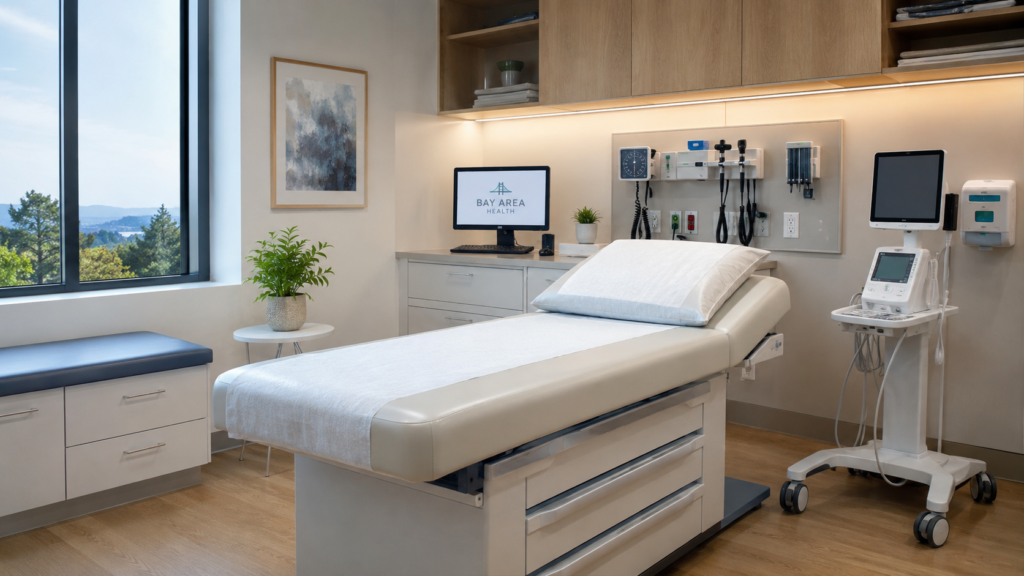
Late August in a Bay Area outpatient clinic or dental office brings a predictable operational surge. Back-to-school physicals, delayed summer appointments, and seasonal allergy visits compress patient volume into tight scheduling windows. Waiting rooms cycle through three or four times their normal hourly capacity. Exam rooms turn over every fifteen minutes. In this environment, the gap between a patient leaving and the next one arriving shrinks to minutes. This is not a failure of scheduling. It is a structural reality of late-summer demand. When patient turnover accelerates, surface contamination compounds faster than standard cleaning intervals can address. Understanding how to maintain infection control standards under this pressure is essential for clinic administrators and dental office managers who cannot afford a compliance lapse during their busiest weeks.
The Compounding Contamination Risk in High-Turnover Environments
Medical and dental facilities operate under strict infection control protocols designed for predictable patient flow. Surfaces are sanitized between appointments. High-touch areas are treated on fixed schedules. These protocols function effectively when patient volume matches the staffing and time allocation built into the cleaning plan.
Late summer disrupts this balance. When patient volume increases by thirty to fifty percent, the physical load on every surface in the facility accelerates proportionally. Waiting room chairs, door handles, reception counters, and restroom fixtures accumulate biological contaminants at a rate that outpaces standard hourly sanitization cycles. Exam room tables, instrument trays, and light switches face even more intense turnover pressure.
This matters because cross-contamination in clinical settings carries consequences that extend far beyond aesthetics. A single lapse in surface sanitization can facilitate the transmission of pathogens between patients. For clinic administrators, this represents a direct regulatory compliance risk. State health departments and accrediting bodies do not adjust their standards based on seasonal volume. A facility is either compliant or it is not, regardless of how busy the schedule happens to be.
The Limits of Standard Janitorial Protocols in Clinical Settings
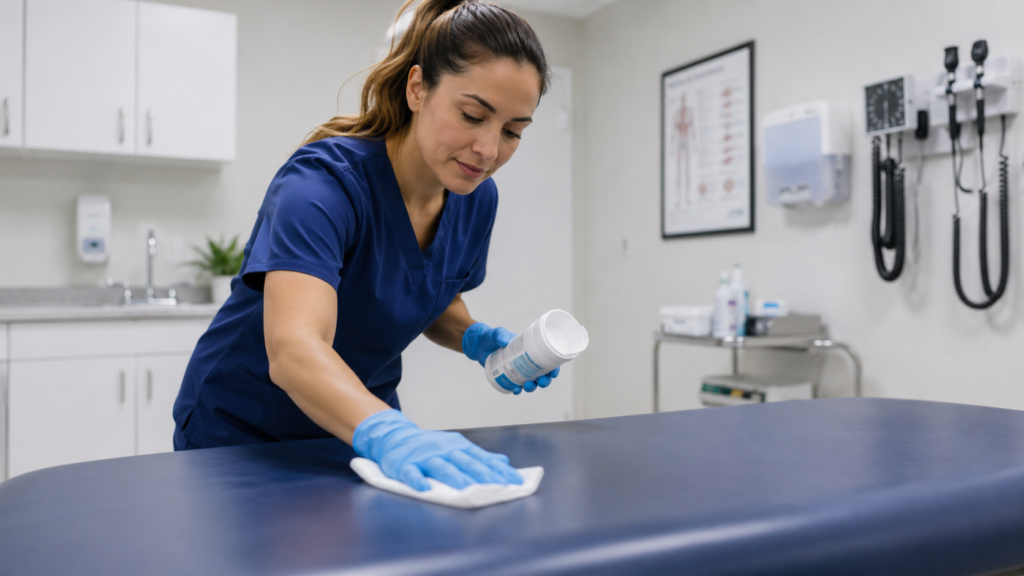
A common operational mistake is treating clinical cleaning as an extension of general commercial janitorial work. Standard janitorial teams are trained to maintain visible cleanliness in office environments. They empty trash, mop floors, and wipe down common surfaces. These tasks are necessary but insufficient for medical and dental facilities.
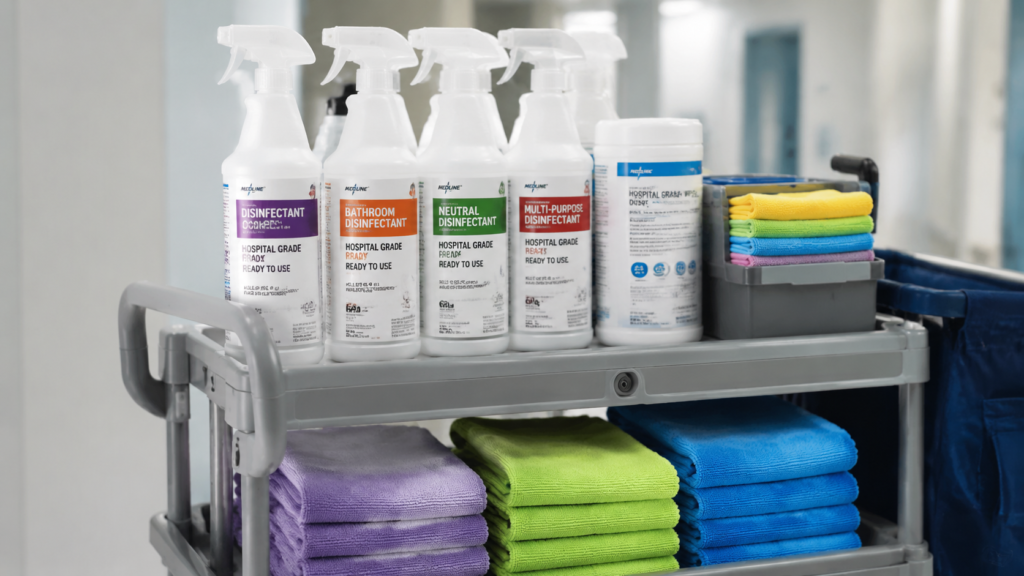
Clinical environments require specialized knowledge of infection control standards, including proper chemical dwell times, cross-contamination prevention through color-coded microfiber systems, and the use of EPA-registered hospital-grade disinfectants. A general janitorial crew may wipe a surface clean, but if the disinfectant is not left wet for the required contact time, the pathogen load is not eliminated. The surface looks clean but remains biologically active.
Furthermore, standard janitorial schedules typically operate after hours. In a high-turnover clinical environment, the critical contamination window occurs during operating hours, between patients. An after-hours deep clean cannot retroactively address the cross-contamination risk that accumulated throughout the day. Clinic administrators need continuous daytime sanitization protocols, not just overnight restoration.
Structuring the Late-Summer Clinical Reset
Professionals address this operational gap by implementing a structured clinical cleaning program specifically calibrated for high-turnover periods. This involves three coordinated layers of intervention.
First, a dedicated daytime sanitization technician maintains continuous coverage during peak patient hours. This professional focuses exclusively on high-touch surface sanitization between patient turnovers, ensuring that exam rooms, waiting areas, and restrooms meet infection control standards in real time. This is not a general cleaning role. It is a focused compliance function.
Second, the chemical protocols are adjusted to match the increased biological load. Professionals verify that all disinfectants are EPA-registered for healthcare use and that dilution ratios and contact times are strictly followed. Documentation of these protocols is maintained on-site for inspection readiness.
Third, a comprehensive deep sanitization is scheduled during low-volume windows, typically on weekends or designated slow days. This reset addresses areas that daytime technicians cannot reach during active operations, including HVAC vents, upholstery in waiting areas, and floor grout in restrooms and treatment rooms. This ensures the facility returns to its baseline standard before the next high-volume week begins.
Documenting Compliance for Audit Readiness
In clinical environments, proof of compliance is as important as compliance itself. Regulatory inspections can occur without notice, and the burden of proof rests entirely on the facility. If a clinic cannot produce documented evidence of its sanitization protocols, chemical usage logs, and cleaning schedules, it faces significant regulatory exposure regardless of the actual cleanliness of the space.
Professional medical facility cleaning services in the Bay Area include comprehensive documentation as a standard deliverable. This includes time-stamped cleaning checklists, chemical safety data sheets, and records of staff training on infection control protocols. This audit trail transforms cleaning from an invisible operational expense into a verifiable compliance asset.
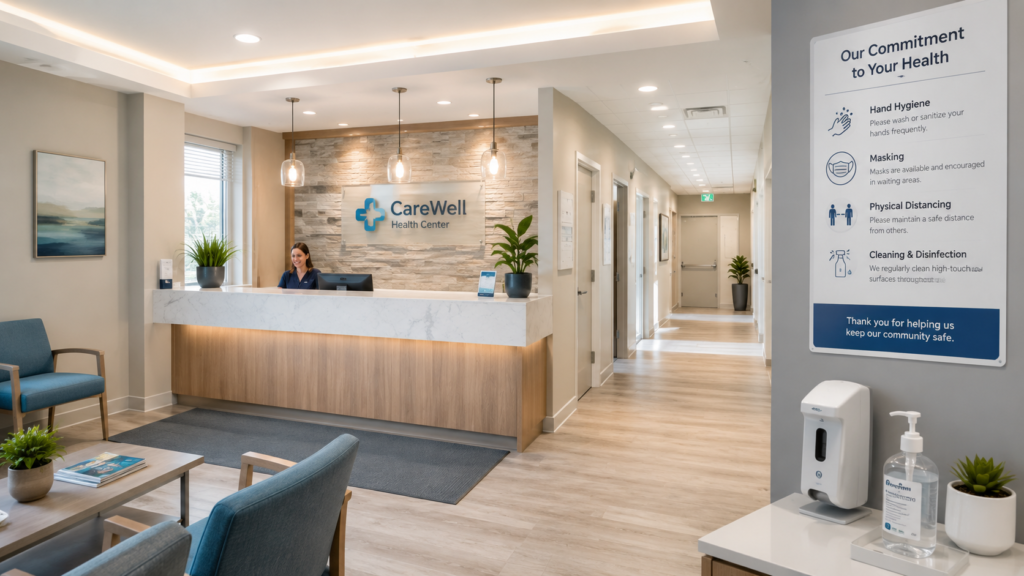
For clinic administrators, this documentation also serves a secondary function. It provides tangible evidence to patients and staff that the facility takes infection control seriously. In an era of heightened health awareness, visible and documented sanitization protocols directly support patient trust and retention.
Final Operational Perspective
Operational risks in clinical environments do not announce themselves with obvious warnings. They accumulate quietly on surfaces between patient appointments, in the gaps between standard cleaning intervals, and in the documentation that was never created. A compliance lapse during a busy August week can trigger regulatory scrutiny that extends well into the autumn.
If your medical or dental facility is navigating late-summer patient surges and you want to ensure your infection control protocols can sustain the increased volume, we invite you to review your current cleaning plan with our team.