
Introduction
The San Francisco Bay Area is defined by its microclimates and distinct seasonal transitions. Nowhere is this more operationally relevant than in the shift from late summer to early winter. The first significant rainfall after a dry summer creates a distinct operational shift. Facility managers notice this transition immediately. Initial moisture interacts with months of accumulated airborne particulate matter. What begins as a subtle layer of dust on exterior walkways and lobby thresholds rapidly transforms into a pervasive tracking issue. This seasonal transition is not merely a cosmetic concern. It represents a measurable shift in facility risk. It directly impacts indoor air quality, flooring integrity, and slip resistance. Addressing this pivot requires more than standard daily janitorial routines. It demands a structured, transitional maintenance strategy.
The Silent Accumulation of Particulate Matter
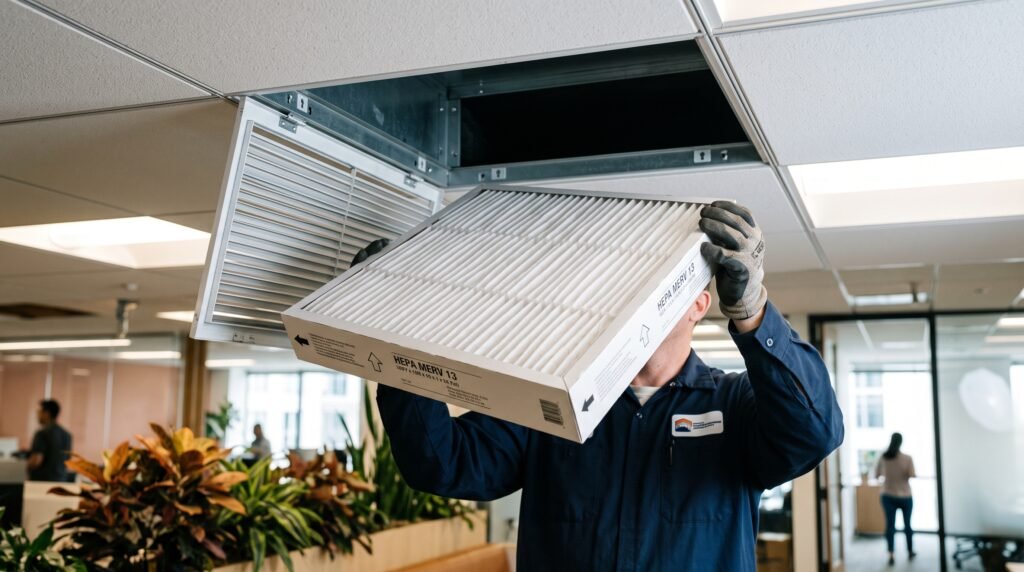
During the late summer and early autumn months, the San Francisco Bay Area frequently experiences elevated levels of airborne particulate matter due to regional wildfire activity. This fine dust, specifically PM2.5, does not simply settle on horizontal surfaces. It infiltrates deep into carpet fibers, adheres to upholstery, and accumulates within HVAC return vents.
This accumulation happens because standard daily janitorial routines are designed for visible debris and high-touch surface sanitization. These routines rarely address microscopic residue trapped within building materials. Furthermore, standard commercial vacuums lacking true HEPA filtration often fail to capture these particles. Instead, they exhaust fine dust back into the ambient air, creating a continuous cycle of contamination.
This matters because dormant residue actively degrades indoor air quality. When facility occupancy increases during cooler months, foot traffic resuspends these particles. The compromised air quality leads to increased employee health complaints and reduced cognitive performance. Additionally, this particulate matter coats HVAC coils and clogs filters. This restriction forces the system to work harder, leading to measurable increases in energy consumption and premature mechanical failure. In sensitive environments like medical clinics or light industrial warehouses, this particulate can compromise sterile conditions or interfere with precision machinery.
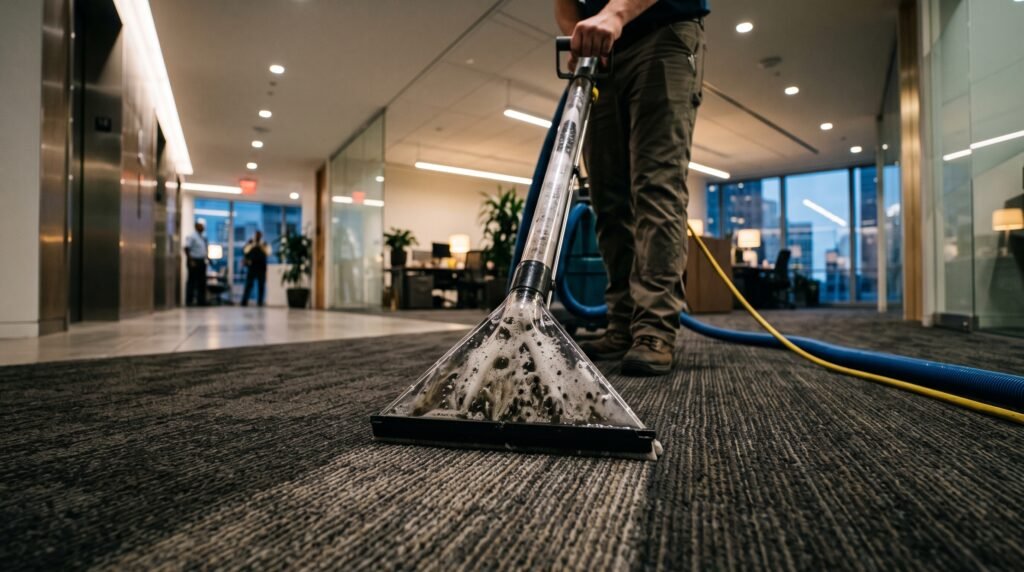
Professionals address this structural vulnerability through targeted transitional deep cleaning. This protocol utilizes certified HEPA filtration vacuums to capture microscopic particles without recirculation. It is followed by specialized hot water extraction methods that lift embedded residue from deep within flooring substrates. This intervention occurs before winter occupancy patterns intensify, ensuring the building envelope is sealed around a clean, stable environment.
The First Rain Factor and Entrance Vulnerability
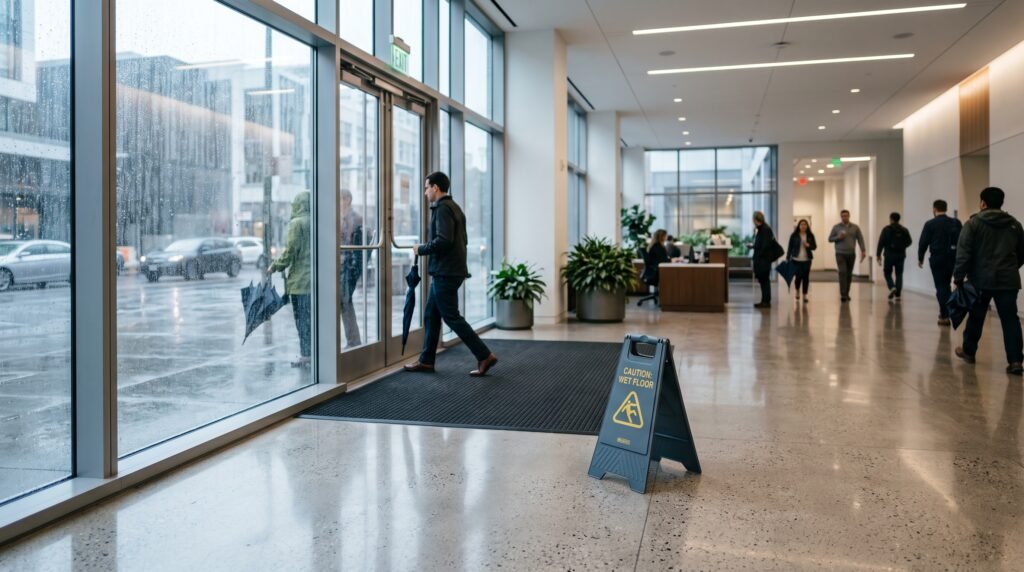
The initial winter storms in the region introduce a new variable. Moisture interacts with the residual exterior dust and ash, transforming it into a dense, abrasive mud.
This tracking issue occurs primarily due to inadequate entrance matting systems. Many facilities either lack sufficient matting square footage or rely on mats that have reached their saturation capacity. When mats are not regularly laundered or replaced, they lose their ability to capture moisture and debris at the threshold.
The operational risk here is twofold. First, tracked-in moisture creates immediate slip-and-fall liabilities. These incidents represent a significant workers’ compensation and general liability exposure for any commercial property. Second, the abrasive nature of this mud acts like fine sandpaper underfoot. It accelerates the degradation of lobby flooring, scratching finishes and grinding dirt into grout lines. This wear pattern necessitates costly and premature flooring replacements.
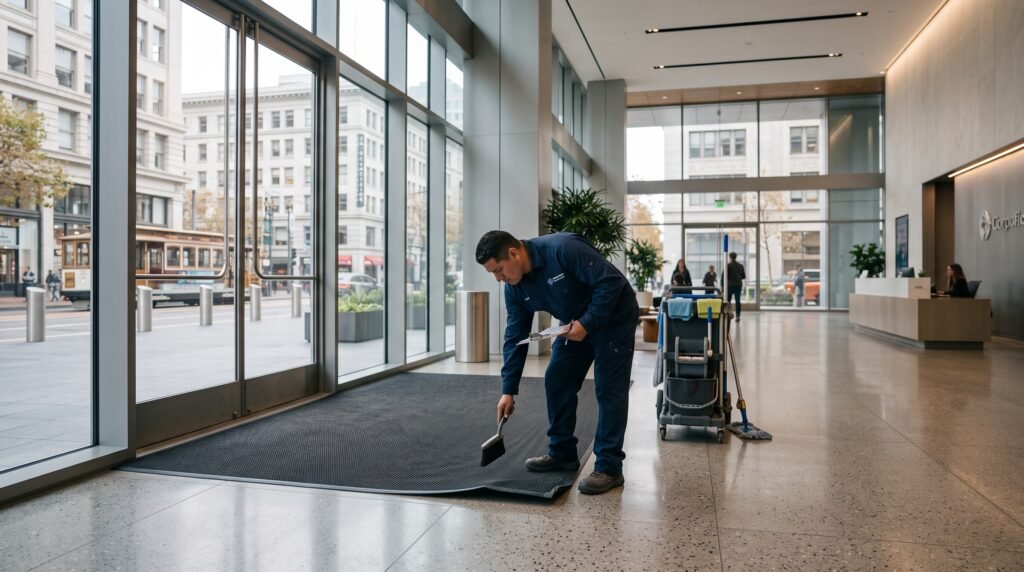
Professionals mitigate this risk by auditing and optimizing entrance matting systems. The industry standard recommends a minimum of fifteen feet of matting. This length is required because it takes approximately eight to ten steps for a shoe to shed its moisture and debris completely. The system combines high-absorbency external scraper mats to remove bulk debris with internal wiper mats to capture residual moisture. This physical barrier is supported by rigorous moisture monitoring protocols and frequent mat laundering schedules during active wet weather events.
The Compounding Strain on Indoor Air Quality
As outdoor temperatures drop, facility managers naturally seal building envelopes to conserve heat. Concurrently, indoor occupancy often increases as organizations finalize Q4 objectives and remote workers return to the office.
This combination creates a compounding strain on the indoor environment. Sealed spaces restrict natural airflow and ventilation. When residual particulate matter is present, it concentrates within the occupied space rather than dissipating.
The consequences of poor indoor air quality extend beyond mere discomfort. Industry benchmarks, such as ASHRAE Standard 62.1, outline specific requirements for acceptable indoor air quality. Failing to maintain these standards can trigger compliance violations during routine health and safety inspections, particularly in regulated environments. In corporate offices, poor air quality directly correlates with higher absenteeism and reduced productivity. Occupants in poorly ventilated spaces report higher rates of fatigue, headaches, and respiratory irritation.
Structural prevention requires a coordinated effort between facility management and specialized cleaning providers. This collaboration includes scheduling pre-winter HVAC duct inspections and upgrading to higher MERV-rated filters, provided the system specifications allow for the increased airflow resistance. Cleaning teams complement this by conducting comprehensive high-touch surface sanitization, reducing the overall bioburden and supporting a healthier indoor ecosystem by removing the settled dust that occupants might otherwise touch and transfer.
Reframing Q4 Maintenance as Asset Preservation
A common pattern in facility management is viewing transitional deep cleaning as an optional, redundant expense. This hesitation usually stems from the presence of an existing daily janitorial crew.
This perspective arises because the value of daily cleaning is often measured strictly by visible cleanliness. A tidy lobby and empty trash receptacles create the illusion of a fully maintained facility. This narrow metric obscures the invisible, progressive degradation occurring beneath the surface of carpets, vents, and flooring substrates.
Deferring transitional maintenance fundamentally shifts the financial burden. It moves the cost from a predictable, manageable operational expense to an unpredictable capital expenditure. Facility directors who delay this maintenance often face emergency carpet replacement, extensive grout restoration, or emergency HVAC coil cleaning in the middle of the fiscal year. These reactive costs are invariably higher than proactive maintenance due to expedited service premiums and unplanned operational downtime. Furthermore, proactive maintenance documentation can be leveraged during insurance renewals to demonstrate rigorous risk management, potentially influencing premium assessments.
Forward-thinking facility leaders integrate transitional deep extraction into their Q4 operational budgets. This proactive measure removes months of settled particulate matter before winter moisture can bind it to flooring fibers. This strategy extends the lifecycle of facility finishes, ensures a safe and compliant environment, and demonstrates rigorous operational stewardship throughout the winter months. By acting in October, managers can utilize remaining fiscal year funds efficiently or plan accurately for the next year, avoiding emergency procurement processes that carry significant cost penalties.
The Operational Workflow of a Transitional Deep Clean
Executing a successful transitional deep clean requires a methodical approach that goes far beyond standard mopping and vacuuming. Professionals follow a structured workflow designed to address both airborne and surface-level contaminants simultaneously.
The process begins with a comprehensive facility audit. Technicians assess the current state of entrance matting, inspect HVAC filter conditions, and identify high-traffic zones where particulate accumulation is most severe. This data informs a customized cleaning plan tailored to the specific layout and usage patterns of the facility.
Next, the focus shifts to airborne particulate management. Before any wet cleaning occurs, technicians utilize commercial-grade HEPA vacuums on all soft surfaces, including carpets, upholstered furniture, and drapery. This dry extraction phase is critical. If moisture is introduced before removing dry particulate, the water binds with the dust, creating a muddy slurry that is significantly harder to extract and can lead to wicking, where dirt rises back to the surface as the carpet dries.
Following dry extraction, the team performs hot water extraction on carpets and resilient flooring. The selection of cleaning chemistry is equally critical. Professionals avoid harsh, highly alkaline cleaners that can strip protective finishes from resilient flooring or leave sticky residues that actually attract more dirt. Instead, they utilize neutral, pH-balanced solutions designed specifically for commercial environments. These solutions effectively break down the complex bonds of wildfire ash and urban grime without compromising the integrity of the flooring material or leaving behind any chemical residue that could off-gas and further degrade indoor air quality.
Finally, the workflow includes a thorough review of high-touch surfaces and a final inspection of the entrance matting systems. Technicians ensure that all mats are properly secured, free of trip hazards, and positioned to maximize their moisture-capturing potential. This holistic approach ensures that the facility is not just superficially clean, but structurally prepared for the demands of the winter season.
Closing Insight
Operational problems compound quietly. The transition from dry, particulate-heavy autumn days to wet winter conditions is a predictable environmental shift. Addressing it with structured, proactive maintenance protocols transforms a seasonal vulnerability into a clear demonstration of operational excellence. Facility leaders who anticipate this shift protect their assets, their occupants, and their bottom line. This proactive mindset separates reactive facility management from true operational leadership. By recognizing the environmental cues and acting decisively, organizations safeguard their physical infrastructure and the well-being of everyone who enters the building.
Call to Action
Is your facility Q4 maintenance plan accounting for these seasonal environmental shifts? Contact our Bay Area facility specialists for a complimentary transitional readiness assessment.