

A typical summer morning in the Bay Area follows a predictable environmental pattern. The coastal marine layer saturates exterior concrete with moisture overnight, before burning off under the midday sun. For property managers and facility administrators, this daily cycle is more than a nuisance; it is an operational vulnerability. When urban dust, pollen, and exhaust particulates settle on damp concrete, they form an invisible organic biofilm. Evaluating maintenance strictly through the lens of aesthetics misses the primary reality: this microscopic layer creates significant premises liability risks that standard sweeping cannot resolve. Managing this biological accumulation is essential for protecting your organization from unpredictable financial exposure and ensuring continuous regulatory compliance.
The Mechanics of Biofilm Accumulation on Coastal Concrete
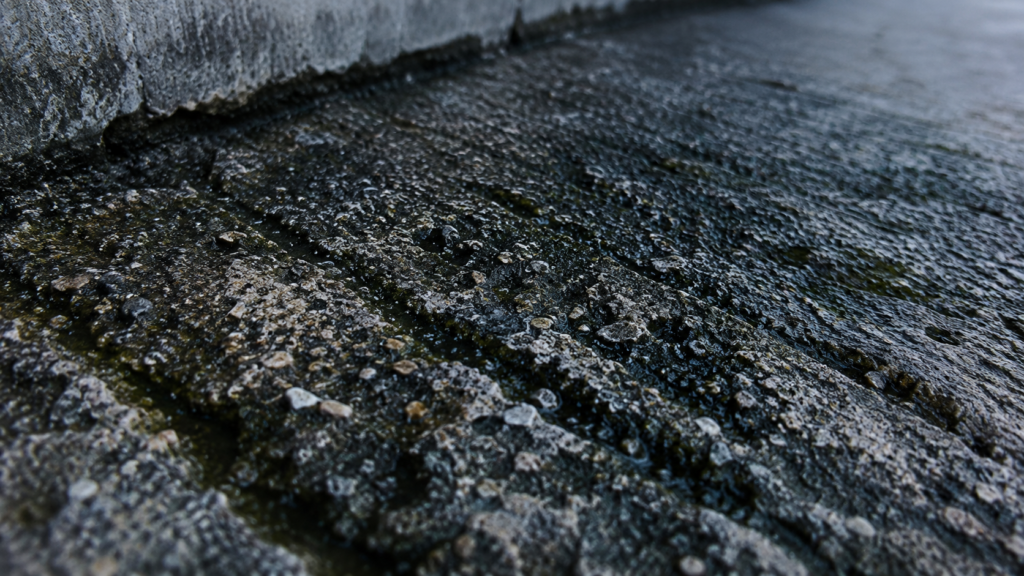
Commercial concrete is inherently porous and moisture-retentive. In the Bay Area, summer fog and morning dew provide a constant moisture source for organic growth. Airborne particulates settle into the microscopic pores and textured grooves of walkways. Over time, these elements bind with moisture to create a resilient biofilm, particularly in shaded corridors, building entrances, loading docks, and parking structures.
This biological layer fundamentally alters surface properties. Concrete is finished with a broom texture for slip resistance; when biofilm fills these grooves, the surface becomes unnaturally smooth. When damp, this compacted organic matter acts like black ice, drastically reducing the coefficient of friction. A pedestrian or patient may encounter a severe slip hazard without visual warning. For medical facilities, this is critical; individuals with mobility aids are disproportionately affected. A slip that causes a minor stumble for an able-bodied adult can result in catastrophic injury for vulnerable patients.
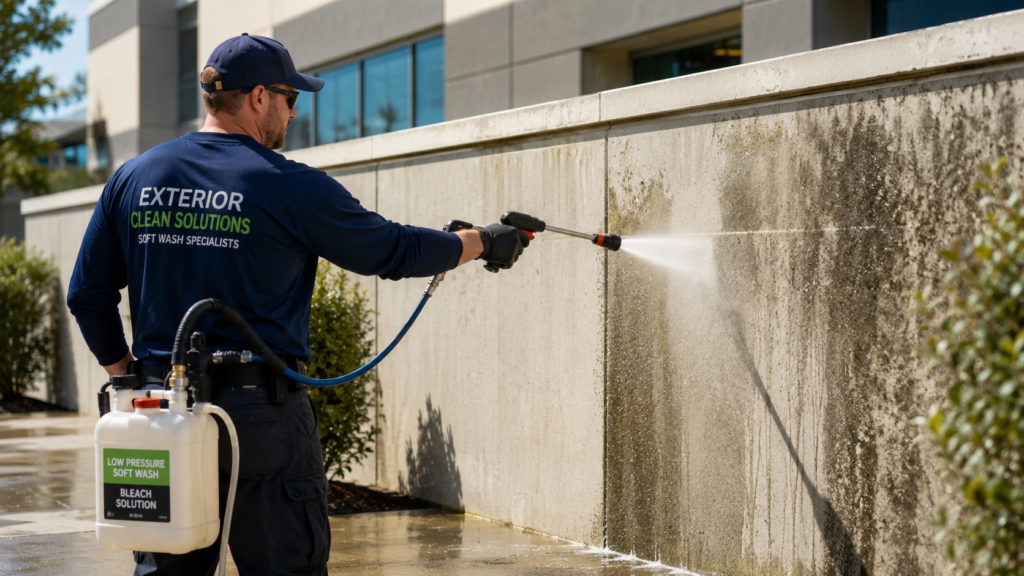
Professionals address this by moving beyond surface-level cleaning. Traditional pressure washing often fails to penetrate deep pores and can strip away the vital broom finish, accelerating long-term degradation. Instead, specialized soft washing combined with targeted, environmentally compliant biocides eradicates the organic roots, restoring natural friction rather than merely washing away surface dirt.
The Hidden ADA Compliance and Surface Degradation Risks
Facility directors often focus on major structural repairs while overlooking surface degradation caused by trapped moisture. The continuous presence of biofilm retains moisture against the concrete substrate. This promotes spalling, cracking, and uneven settling. Over a single season, minor surface imperfections can become significant trip hazards.
The constant expansion of organic matter within concrete cracks exerts outward pressure. This creates a direct conflict with Americans with Disabilities Act (ADA) compliance, which mandates smooth, navigable transitions. A navigation failure or trip incident caused by surface degradation exposes property owners to severe legal scrutiny and mandatory remediation. By integrating deep cleaning into asset preservation, maintenance teams extend the lifespan of the concrete and maintain the strict surface tolerances required for regulatory compliance, avoiding the high cost of premature replacement.
The Financial Reality of Premises Liability and Constructive Notice
The most significant cost of neglected maintenance is its impact on insurance premiums and legal defense funds. In premises liability law, the concept of “constructive notice” is paramount: if a hazard exists long enough that a reasonable property owner should have known about it, they are liable, regardless of whether they actually saw it. Defense costs for these claims are exceptionally high. Proving that a robust, documented maintenance protocol existed is difficult without precise records. Many facilities rely on reactive cleaning, which provides no legal defense when an incident occurs between scheduled cleanings.
Professionals mitigate this by implementing documented, scheduled maintenance programs. Commercial cleaning in the Bay Area should be scheduled based on microclimate exposure, historical moisture data, and biological growth cycles, not just visual cues. This creates a verifiable, legally defensible audit trail. This must include specific details regarding chemical dilutions, square footage, ambient temperature, and post-treatment friction results. Insurance adjusters and legal teams require this level of granular documentation to verify that maintenance was an actively enforced operational standard rather than a theoretical policy.
The Operational Disruption of Reactive Exterior Maintenance
Treating exterior maintenance as a cosmetic line item leads to misalignment. The reactive model—waiting until stains are visible or incidents occur—inevitably fails in coastal environments. By the time biological stains are visible, the biofilm has already compromised surface friction and degraded the substrate.
Furthermore, when a slip and fall occurs, the operational fallout is severe. Areas must be cordoned off, investigated, and aggressively cleaned, disrupting tenant operations and damaging property reputation. In medical facilities, this disrupts ambulance access and patient mobility, creating secondary safety risks. In retail plazas, blocked walkways reduce foot traffic to tenants. Proactive maintenance shifts exterior upkeep into the core risk management budget. By scheduling interventions based on predictive data, facility managers eliminate the operational anxiety associated with unpredictable weather and sudden liability events, ensuring smooth, safe operations for all visitors.
Final Operational Perspective
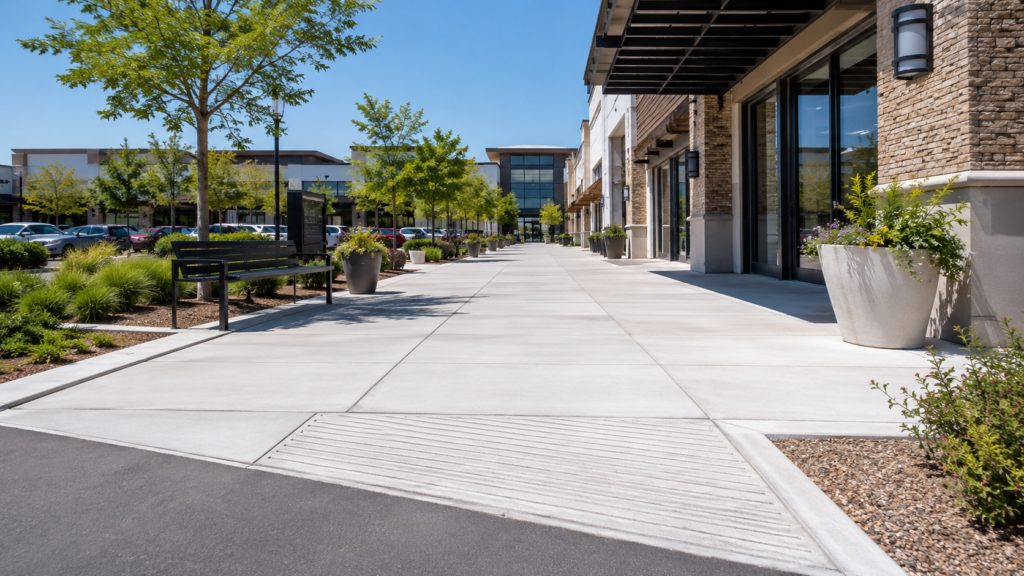
Operational risks in facility management accumulate quietly in the pores of concrete and the shaded corners of parking structures. Recognizing that exterior maintenance is a fundamental component of premises liability, rather than a simple cosmetic enhancement, is the first step in protecting your organization from unpredictable financial exposure and ensuring a safe environment for every visitor. Contact your maintenance partner today to audit your facility’s exterior safety protocols and establish a data-driven cleaning schedule.