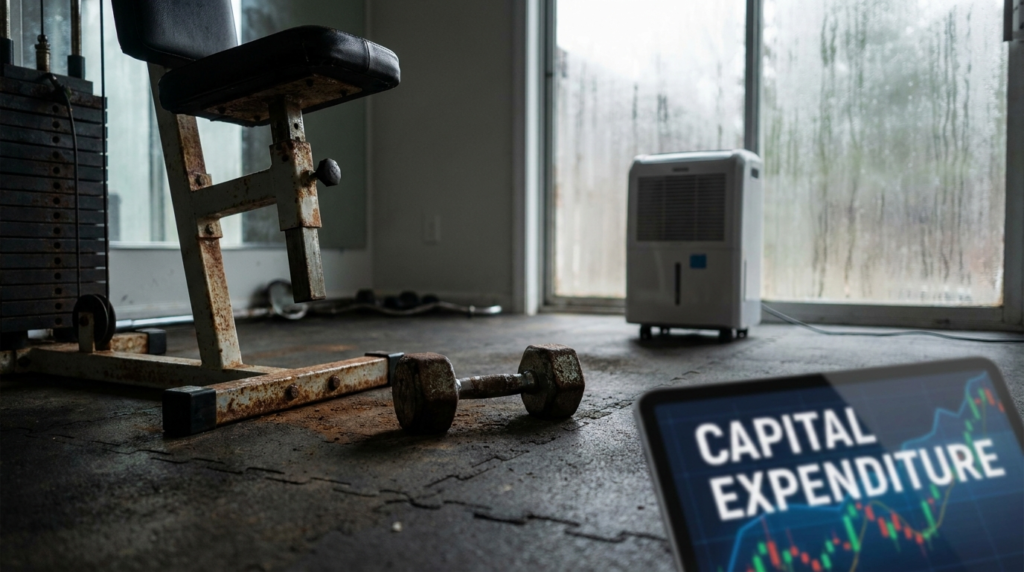
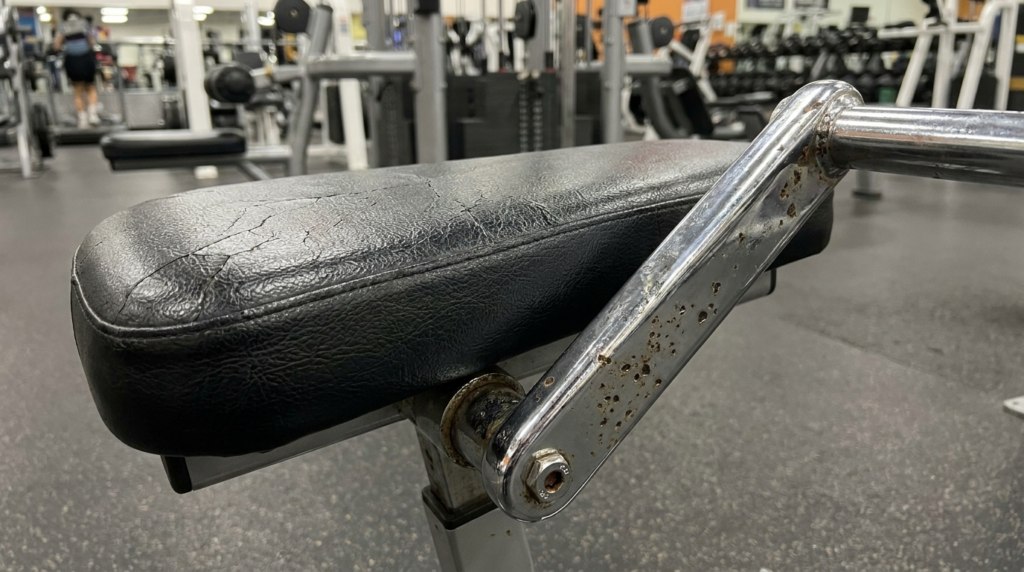
When a facility manager walks the floor of a large commercial fitness center at dawn, the signs of wear are often obvious before the first member even arrives. The leather on the cable machine seats is cracking. The chrome on the selectorized weight stacks is pitting. The paint on the free weight handles is flaking, and the treadmills are experiencing intermittent electronic failures. The immediate assumption is usually normal wear and tear, or perhaps a bad batch of equipment from the manufacturer. However, the real culprit is frequently the daily cleaning protocol. Sweat and moisture, when not structurally managed, create a highly corrosive environment that destroys expensive assets.
The Chemistry of Sweat and Equipment Degradation
Human sweat is a highly acidic, saline solution. When members wipe down equipment with generic, overly wet towels, or when staff apply improper disinfectants, the moisture sits in the crevices of upholstery and seeps into the mechanical joints. This unmanaged moisture creates a highly corrosive microenvironment. The salt in the sweat accelerates oxidation on metal components, while the acidity breaks down the chemical bonds in vinyl and urethane padding.
This is not a cosmetic issue. It is a structural failure of the asset. When equipment degrades prematurely, it requires costly refurbishment or total replacement. The financial impact is significant, turning what should be a ten-year capital asset into a five-year liability.
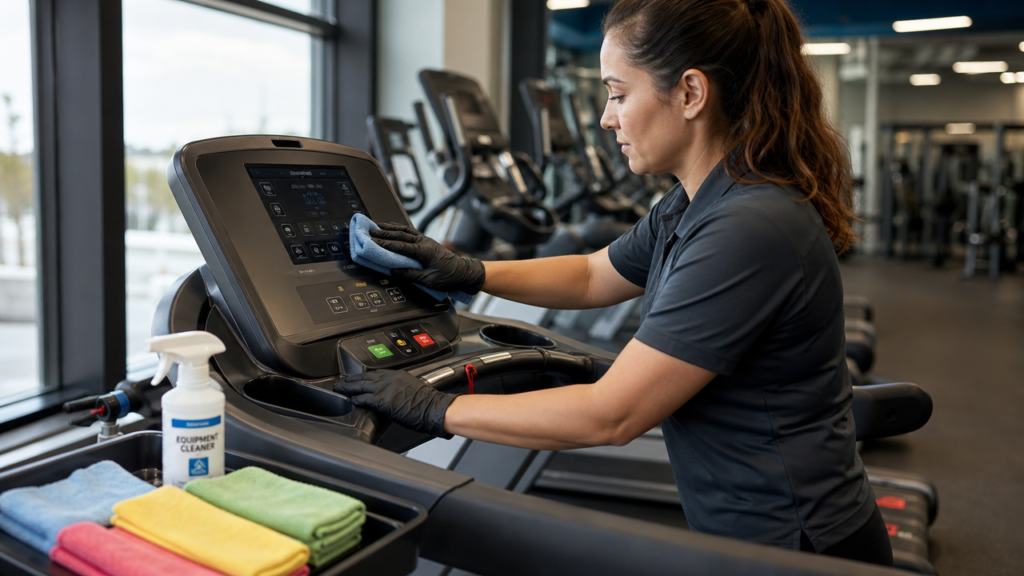
Professionals address this through structured moisture control. This means moving away from generic spray bottles and cotton rags. Instead, commercial gym cleaning services utilize color-coded microfiber systems that capture and hold moisture and biological matter rather than just spreading it across the surface. Furthermore, they apply pH-neutral, equipment-safe disinfectants that are specifically formulated to evaporate quickly without leaving corrosive residues behind. By controlling the chemistry and the moisture volume, the degradation cycle is interrupted.
The Hidden Cost of Persistent Facility Odor
There is a specific, lingering odor that plagues many large fitness centers. It is a sour, musty smell that persists even after the nightly cleaning crew has finished their rounds. Facility managers often try to mask this odor with air fresheners or increase the frequency of surface wiping, but the smell always returns.
Odor in a commercial gym is rarely a surface issue. It is almost always a trapped moisture issue. When floors, rubber mats, and equipment upholstery remain damp after cleaning, bacteria proliferate in the sub-layers. Generic mopping techniques often push this biological matter deeper into porous surfaces like rubber flooring and foam padding. Once trapped in these anaerobic environments, the bacteria produce volatile organic compounds, which manifest as that persistent sour smell.
The operational risk here is twofold. First, members directly associate the smell with poor hygiene, which is a primary driver of membership churn. Second, the persistent odor indicates a fundamental structural failure in the floor care and maintenance workflow. The facility is not actually being sanitized; it is merely being redistributed.
To resolve this, professionals implement floor care and maintenance protocols that prioritize extraction and rapid drying. This involves using specialized equipment that pulls moisture and biological matter out of the porous top layer of rubber flooring, rather than pushing it deeper. Combined with targeted equipment sanitization workflows that ensure moisture is physically removed from upholstery, this approach eliminates the damp environments where odor-causing bacteria thrive. The result is a facility that smells neutral and clean, not because of chemicals, but because the biological source has been structurally removed.
Electronic Console Failures and the Moisture Intrusion Problem
Modern commercial fitness equipment is essentially a network of sensitive computers. The touchscreens, incline motors, and resistance controllers on commercial treadmills and ellipticals are expensive to replace. When these consoles fail, it is rarely due to a manufacturing defect. More often, it is the result of liquid intrusion.
The failure mode is highly predictable. Well-meaning staff members or gym-goers spray disinfectant directly onto the console screens, or they use soaking wet disinfecting wipes. The liquid runs down the incline of the screen, pools at the bottom bezel, and seeps into the internal housing. Once inside, it shorts the circuit boards or corrodes the internal connections. The console becomes unresponsive, flickers, or dies completely.
Replacing a single commercial treadmill console can cost thousands of dollars. Beyond the direct capital expenditure, the downtime frustrates members, disrupts the operational flow of the gym floor, and creates a negative perception of equipment reliability.
Professionals prevent this through strict equipment sanitization protocols. The fundamental rule is to never spray liquid directly onto the equipment. Disinfectant is applied to the microfiber cloth first, ensuring it is damp, not wet. This low-moisture approach sanitizes the high-touch surfaces effectively without risking liquid intrusion into sensitive electronic components. By training staff on these precise application methods and utilizing the right tools, facility managers can protect their electronic investments from the very processes meant to maintain them.
The Operational Shift from Reactive Wiping to Structural Prevention
Many commercial gyms operate with a reactive cleaning model. During peak hours, staff are tasked with rapid, superficial wipe-downs of equipment to keep things moving. Members are also encouraged to wipe down machines after use. While this feels like a necessary operational compromise to maintain gym flow and keep the floor looking active, it is highly ineffective for long-term asset protection.
Superficial wiping with standard towels or improper chemicals simply spreads sweat, oils, and bacteria from one machine to the next. It creates a false sense of security. The equipment looks visually acceptable in the moment, but the underlying chemical and biological degradation continues unabated. The moisture is not being managed; it is merely being redistributed across the facility. Over time, this cumulative effect accelerates the breakdown of materials and compromises the hygiene of the entire environment.
Transitioning to a model of structural prevention requires a fundamental shift in how gym and fitness center cleaning is conceptualized. It means recognizing that cleaning is not just a visual task, but a critical asset management protocol. The goal is not just to make the equipment look clean for the next user, but to preserve the physical integrity of the machine for the next five years.
Professionals implement scheduled, deep sanitization workflows during off-peak hours. This involves using the correct chemistry, applied with precision tools, to physically remove biological matter and neutralize acidic residues. It also means establishing a member-facing system that manages surface moisture effectively without damaging the assets, such as providing properly sized, low-lint wipes and clear guidance on how to use them. By shifting the focus from reactive appearance management to structural prevention, facility managers can significantly extend the lifecycle of their equipment and maintain a higher standard of operational hygiene.
Equipment depreciation is often viewed as an inevitable cost of doing business in the fitness industry. But when that depreciation is accelerated by the very processes meant to maintain the facility, it becomes an operational failure. Managing moisture is not just about hygiene or appearance. It is about fundamental asset protection and financial stewardship.
If you are evaluating your facility’s cleaning workflows and want to understand how moisture management impacts your equipment lifecycle, we can walk you through a structural assessment of your current protocols.