Introduction
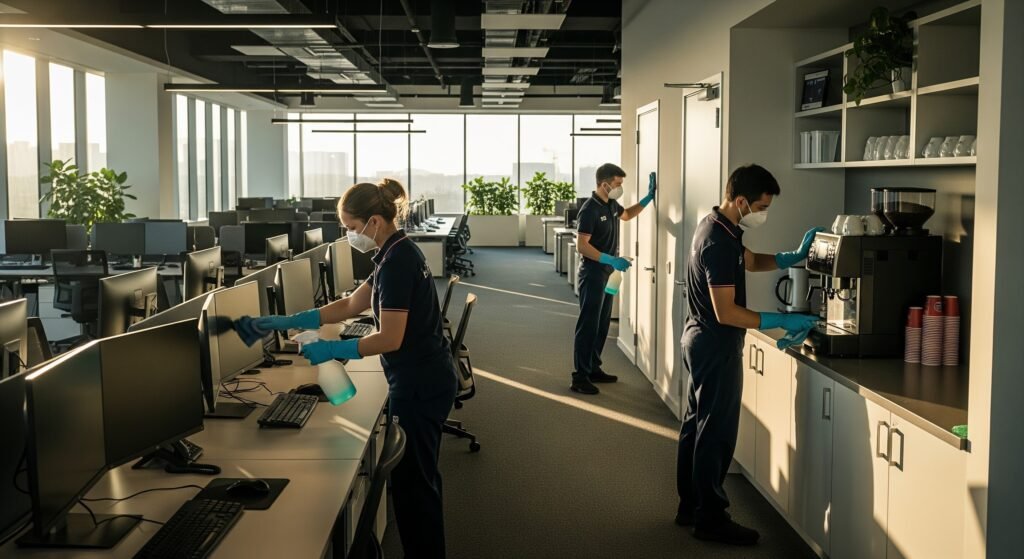
It is 7:45 a.m. in a SOMA office tower. The lobby gleams. Conference rooms are staged. Restrooms pass a visual check. Yet by mid-morning, facility coordinators field quiet complaints: sticky elevator buttons, a faint odor near the breakroom sink, conference chairs that feel dusty to the touch. Nothing is visibly dirty. Nothing fails a basic walkthrough. But the space does not feel operationally safe to the people who use it all day.
This gap between appearance and operational readiness is why Bay Area office managers are revisiting their cleaning specifications. The question is no longer “Is it clean?” but “What protocols ensure this environment supports continuity, health expectations, and professional credibility hour after hour?”
The Specification Gap: When “Clean” Stops Short of “Safe”
Many commercial cleaning contracts define success through observable outcomes: floors vacuumed, trash emptied, surfaces wiped. These metrics matter. But they address only the visible layer of facility hygiene.
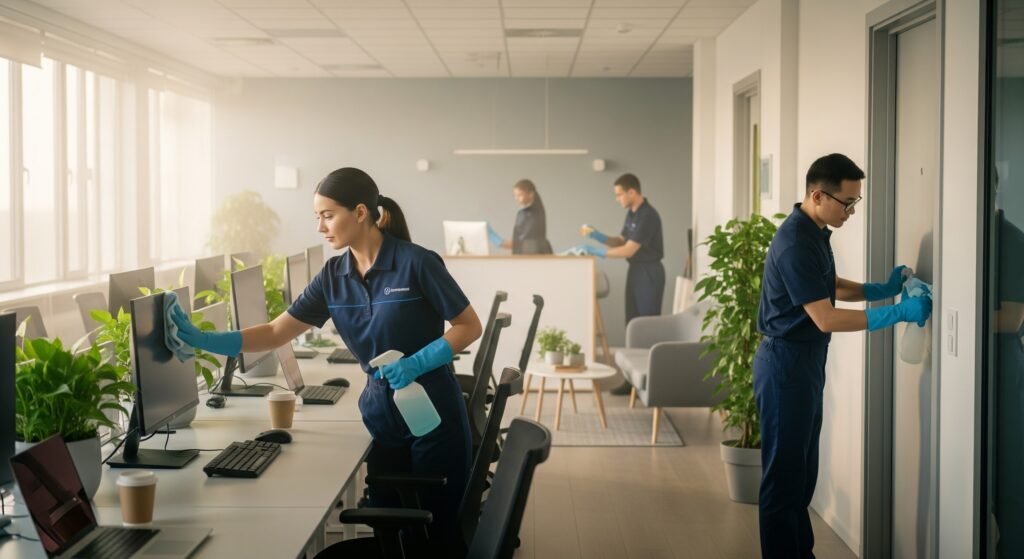
What often goes unspecified are the protocols that govern frequency, sequence, and documentation for high-touch rotation, air quality support, and cross-contamination prevention. A reception desk may be wiped at 6 a.m., but what about after a delivery drop-off at 10 a.m.? A conference room may be reset after a meeting, but are microphone headsets and shared tablets included in the disinfection sequence?
This gap emerges not from negligence but from ambiguity. When specifications focus on tasks rather than outcomes, teams execute what is written, not what is needed. The result is a space that photographs well but accumulates latent risk: employee skepticism about workplace care, visitor impressions that subtly undermine professionalism, and audit readiness that depends on memory rather than documentation.
Why This Pattern Persists in Bay Area Office Environments
Several factors reinforce specification ambiguity in corporate settings. First, procurement processes often prioritize cost predictability over operational granularity. A line item for “office cleaning” is easier to compare across vendors than a detailed matrix of surface categories, rotation frequencies, and verification steps.
Second, decision-makers inherit contracts that were written for different usage patterns. A specification drafted pre-2020 may not account for heightened expectations around shared equipment hygiene or the role of cleaning documentation in employee reassurance.
Third, facility teams manage multiple vendors and internal stakeholders. Without a clear, written standard for what “clean” means in operational terms, coordination defaults to reactive communication: a complaint triggers a one-time fix, not a systemic adjustment.
The Bay Area context intensifies these dynamics. Tech companies and professional services firms operate in competitive talent markets where workplace experience directly influences retention. Sustainability commitments add another layer: cleaning protocols must align with green building standards without compromising efficacy. When specifications do not explicitly address these intersections, execution becomes inconsistent.
The Operational Cost of Ambiguity
Ambiguous specifications create compound costs that are easy to overlook until they accumulate.
Employee trust erosion. When staff perceive that high-touch surfaces are not consistently addressed, they may compensate with personal disinfectants or avoid shared spaces. This behavior signals a breakdown in confidence that the environment is being managed proactively.
Reputation exposure. Client visits, investor tours, and partner meetings happen without warning. A space that appears clean but feels neglected in subtle ways—sticky surfaces, dusty vents, inconsistent restroom supplies—can undermine professional credibility in moments that matter.
Compliance adjacency. While most office environments are not subject to medical-grade regulations, California’s Green Seal GS-42 and CALGreen standards create expectations for product selection, waste handling, and indoor air quality support. Specifications that omit these considerations may leave facility managers unprepared for sustainability audits or tenant inquiries.
Operational disruption. When cleaning protocols are not aligned with actual usage patterns, teams spend time reacting to issues rather than preventing them. A spill addressed hours after it occurs requires more effort and creates more downtime than one managed within a defined response window.

How Professionals Structure Cleaning Specifications for Operational Safety
Leading facility teams approach cleaning specifications as living documents that translate operational priorities into executable protocols. Four principles guide this work.
Define outcomes, not just tasks. Instead of “wipe desks,” specify “reduce microbial load on high-touch horizontal surfaces to support employee confidence, with rotation frequency aligned to peak usage windows.” This shifts focus from activity to impact.
Map protocols to usage patterns. A co-working space with rotating members has different high-touch dynamics than a law firm with assigned workstations. Specifications should reflect when and how spaces are used, not just what surfaces exist.
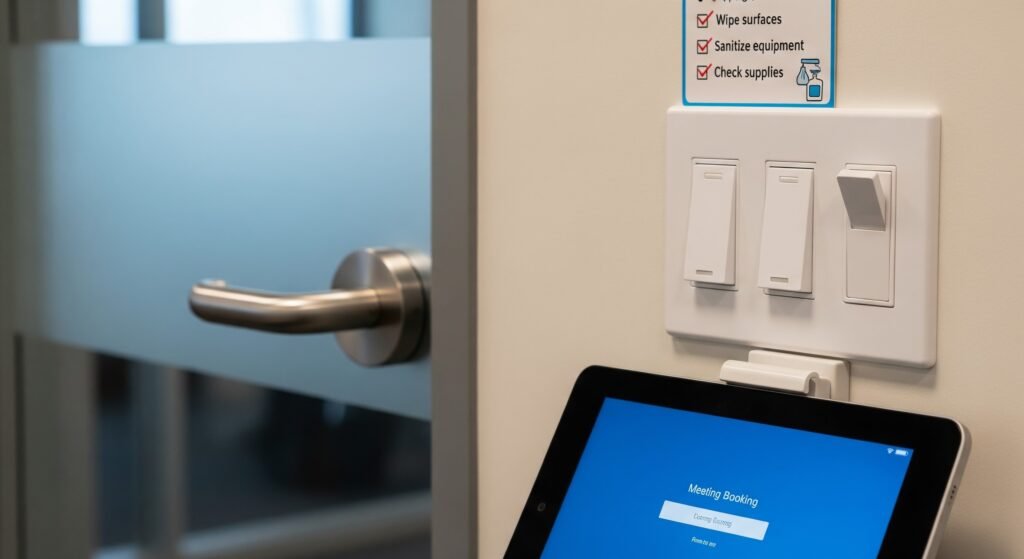
Build in verification layers. Documentation is not bureaucracy when it serves clarity. Simple checklists that capture completion time, product used, and surface category create accountability without burden. Digital tools can streamline this, but even paper-based systems work when designed for usability.
Align with broader facility goals. Cleaning specifications should reference sustainability commitments, indoor air quality targets, and brand standards. This integration ensures that cleaning supports, rather than conflicts with, other operational priorities.
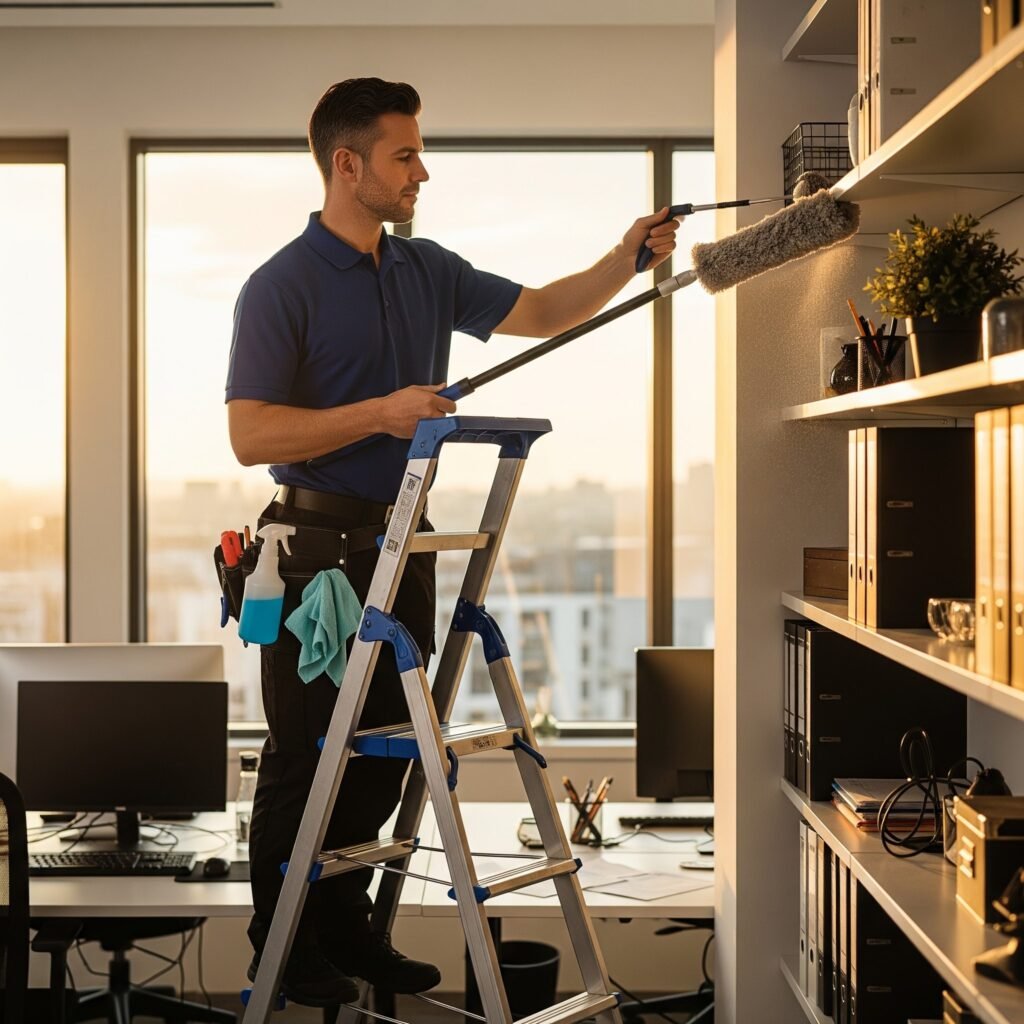
New Revolution Cleaning supports this approach through Customized Cleaning Plans that begin with a facility assessment, Monthly Cleaning Service frameworks that establish baseline consistency, High-Level Dusting Solutions that address air quality considerations, and Advanced Floor Treatment protocols that preserve both appearance and longevity. The goal is not to add complexity but to create clarity: a shared understanding of what “operationally safe” means for your specific environment.
A Practical Starting Point for Specification Review
If your current cleaning contract feels adequate but not fully aligned with operational expectations, begin with three questions.
- What high-touch surfaces in your space receive attention after the initial morning clean?
- How are cleaning activities documented in a way that supports accountability without creating administrative burden?
- What sustainability or indoor air quality commitments should influence product selection or protocol design?
These questions do not require a full contract rewrite. They create entry points for conversation with your cleaning partner about adjustments that improve alignment between specifications and actual needs.
For Bay Area office managers, the shift from “clean” to “operationally safe” is not about perfection. It is about intentionality: ensuring that cleaning protocols reflect how your space is actually used, by whom, and toward what outcomes.

Closing Insight
Operational problems in facility management rarely announce themselves with dramatic failures. They compound quietly: a missed surface here, an undocumented adjustment there, a protocol that worked last year but not this quarter. The work of specification clarity is preventive. It replaces guesswork with structure, and reactivity with rhythm.
For office managers in the Bay Area, the question is not whether cleaning matters. It is whether your specifications ensure that cleaning delivers the operational continuity, risk reduction, and professional credibility your environment requires.
If reviewing your cleaning specifications would bring clarity to your facility operations, New Revolution Cleaning offers a no-obligation assessment to identify alignment opportunities between your current protocols and your operational goals.