It is 6:00 AM. The closing crew has finished their shift. The dining room floors have been mopped, the prep tables have been wiped down, and the trash has been taken out. To the untrained eye, the restaurant looks clean and ready for the morning rush.
Then, at 10:00 AM, the county health inspector arrives.
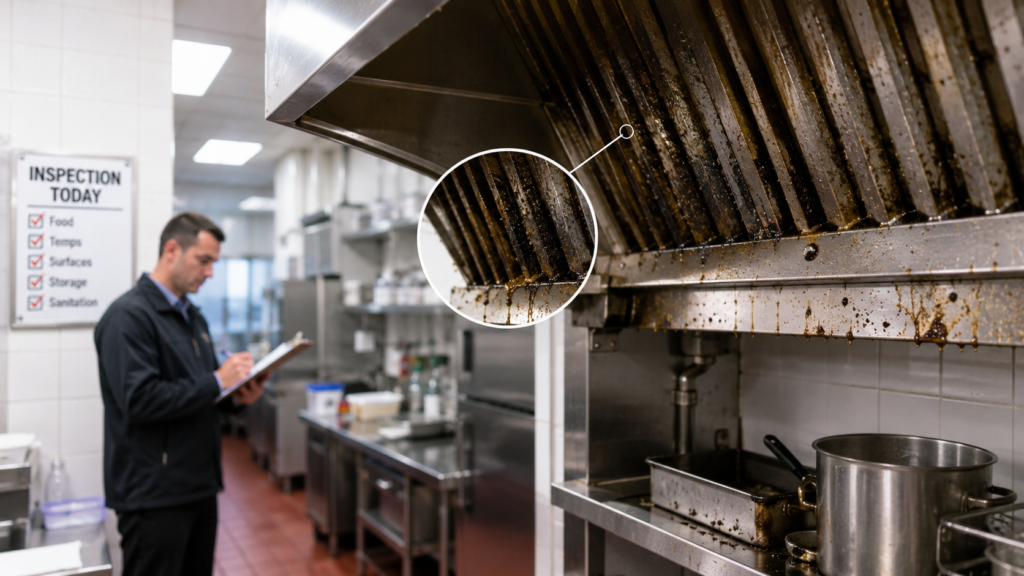
The inspector does not just look at the center of the prep tables. They run a gloved finger along the top edge of the walk-in cooler door gasket. They check the grout lines behind the floor sinks. They pull out the heavy fryers to inspect the casters and the wall space behind the equipment. In these hidden areas, the reality of the facility hygiene shifts entirely. The visual cleanliness achieved by the nightly staff does not translate to structural compliance.
This discrepancy is the compliance gap. It is the space between surface aesthetics and the rigorous, structural sanitation required to pass a health inspection. Understanding this gap is critical for restaurant operators who want to mitigate regulatory risk and protect their operational continuity.
The Chemistry of Micro-Grease and Polymerized Carbon
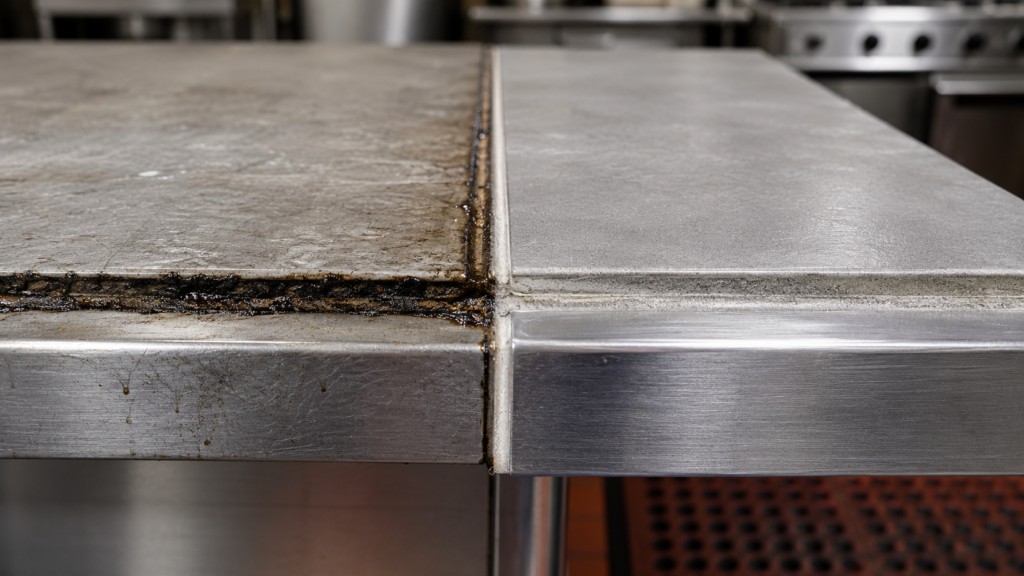
The most common failure mode in commercial kitchens is the accumulation of micro-grease. During a standard daily cleaning shift, staff use standard degreasers and microfiber cloths to wipe down surfaces. This process is highly effective at removing fresh, wet soils and food spills. However, it is largely ineffective against the invisible layer of aerosolized fats and oils that settle on every surface in a commercial kitchen.
When these microscopic oil droplets settle on walls, ceilings, light fixtures, and the edges of equipment, they begin to oxidize. Over the course of several weeks, they polymerize. They transform from a simple oily residue into a hard, sticky, carbon-like substance. Standard daily degreasers are simply not chemically formulated to break the molecular bonds of this cured carbon. As a result, the daily wiping process often just spreads the micro-grease around or pushes it deeper into porous surfaces.
Health inspectors are specifically trained to look for this polymerized buildup. They check the tops of door frames, the corners of ceiling tiles, and the rubber gaskets on refrigeration units. When they find it, it indicates a systemic failure in the facility maintenance protocol, regardless of how clean the prep tables look.
Professional deep cleaning addresses this specific failure mode by utilizing high-temperature steam, specialized high-alkaline compounds, and mechanical agitation. These methods are designed to break the chemical bonds of cured grease, lifting it from the substrate rather than just redistributing it across the surface.
Blind Spots in Front-of-House and Restroom Environments
The compliance gap is not limited to the back-of-house kitchen environment. The Front-of-House (FOH) and customer restrooms present their own set of structural vulnerabilities that daily cleaning protocols routinely miss.
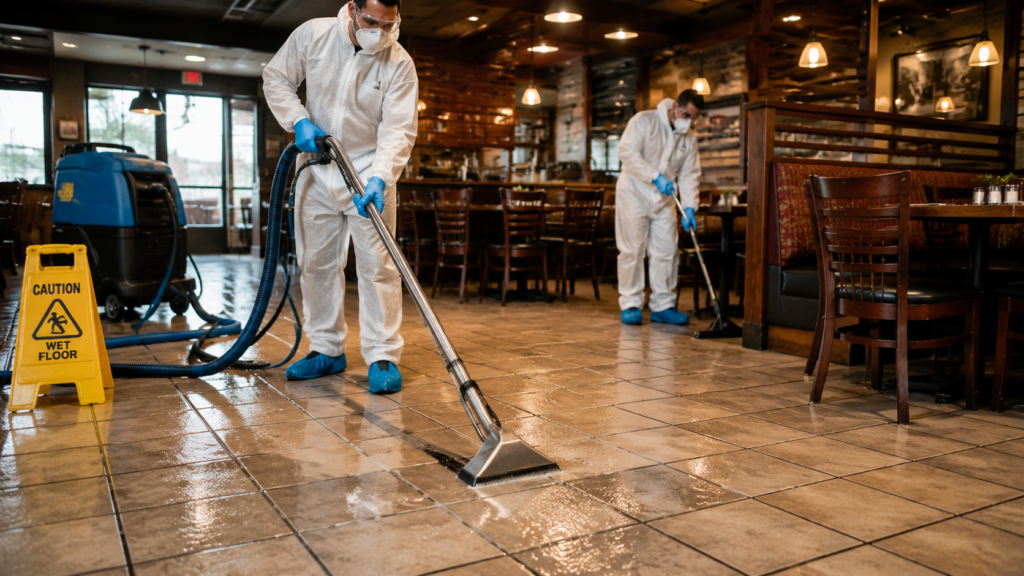
In the dining area, floors are typically swept and mopped nightly. However, mopping is a surface-level activity. In high-traffic restaurants, spills, tracked-in soil, and dissolved sugars are pushed deep into the grout lines and the pores of unsealed stone or concrete floors. A standard mop and bucket cannot extract this embedded soil. Over time, this embedded organic matter ferments. This fermentation process produces volatile organic compounds, which manifest as a persistent, sour odor in the dining room or restrooms.
While a customer might simply perceive this as an unpleasant atmosphere, a health inspector views it as a critical indicator of poor sanitation. Odors signal the presence of active bacterial growth and organic decay. If an inspector detects a persistent odor, they will immediately escalate their scrutiny of the facility, looking for the source of the biological contamination.
Restrooms face a similar structural challenge. Daily cleaning focuses on sanitizing the toilets, sinks, and mirrors. It rarely includes the deep extraction of floor grout or the detailed descaling of porous tile surfaces. Mineral buildup and biological films accumulate in the microscopic valleys of the tile, creating an environment where bacteria thrive despite the daily application of surface disinfectants.
Scheduled monthly cleaning protocols resolve these FOH vulnerabilities. By incorporating mechanical scrubbing and hot water extraction for porous surfaces, professional teams reset the baseline cleanliness of the dining and restroom areas. This removes the embedded organic matter, eliminates the source of odors, and presents a structurally sound environment to inspectors.
The Structural Reality of Kitchen Equipment Maintenance
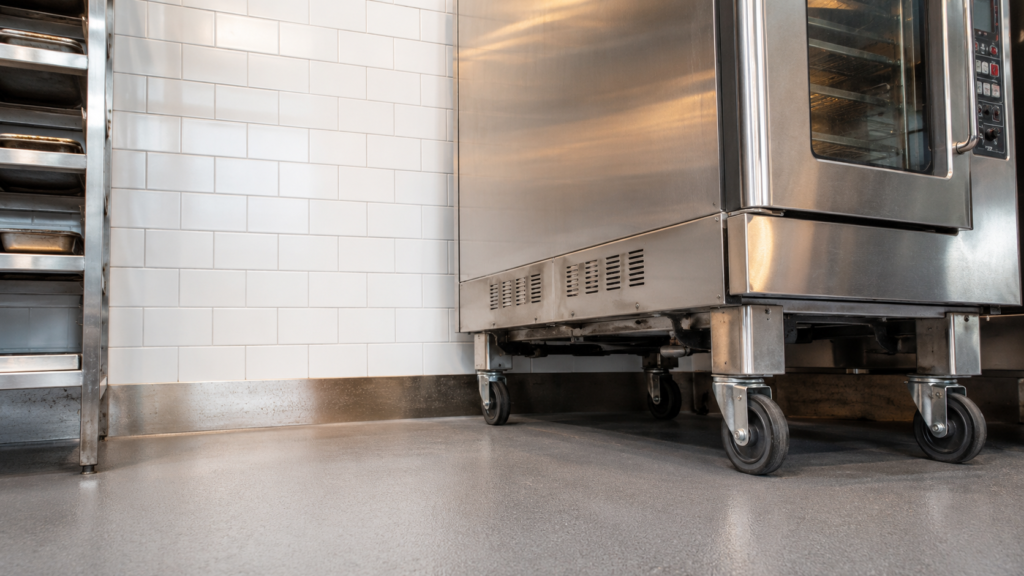
Perhaps the most significant operational blind spot in daily cleaning is the maintenance of heavy kitchen equipment. The exterior of ovens, fryers, prep tables, and walk-in units is wiped down nightly. However, the undersides, internal drip trays, and the spaces immediately behind these units accumulate massive amounts of debris.
Moving heavy, fully plumbed, or hardwired equipment on a daily basis is operationally disruptive and poses a safety risk to standard janitorial staff. Consequently, the areas behind and beneath heavy equipment are rarely cleaned during the nightly shift. This creates ideal harborage zones for pests. Cockroaches and rodents are attracted to the warmth of the equipment motors and the abundant food debris trapped in the inaccessible spaces.
Furthermore, the accumulation of grease beneath fryers and ovens is not just a hygiene issue. It is a severe fire hazard. Health and fire inspectors routinely check behind and under heavy equipment. Finding heavy carbon buildup or pest activity in these zones is an immediate critical violation that can result in a failed inspection and operational shutdown.
Professional monthly deep cleaning incorporates systematic equipment relocation as a core operational procedure. Trained technicians safely move heavy units, degrease the hidden compartments, clean the casters and legs, and thoroughly sanitize the floor and wall spaces behind the equipment. This eliminates pest harborage zones, mitigates fire risks, and ensures the facility meets the strict structural expectations of regulatory inspectors.
Aligning Daily Aesthetics with Structural Compliance
It is important to recognize that daily cleaning and professional deep cleaning serve two distinct operational purposes. Daily cleaning is essential for maintaining surface aesthetics, managing immediate spills, and ensuring the facility is ready for the next service period. It is the baseline of restaurant operations.
However, daily cleaning is not designed to address the slow, cumulative degradation of the facility environment. It cannot break down polymerized carbon, extract embedded biological matter from porous surfaces, or safely manage the deep cleaning of heavy equipment. Relying solely on daily cleaning to pass a health inspection is a structural miscalculation.
Professional monthly deep cleaning acts as the necessary counterweight to daily maintenance. It is a scheduled, systematic intervention designed to eliminate the accumulated risks that daily protocols leave behind. By integrating a structured monthly deep cleaning program, restaurant operators transition their facility management from a reactive posture to a proactive one.
Operational problems in a commercial kitchen compound quietly. A facility does not fail a health inspection because of one bad day. It fails because of months of deferred structural maintenance, where micro-grease, biofilm, and embedded soils are allowed to accumulate beyond the reach of standard daily tools.
Addressing the compliance gap requires acknowledging the physical limits of daily cleaning and implementing a structured, professional deep cleaning protocol. This approach mitigates regulatory risk, protects the physical assets of the facility, and ensures that the restaurant environment is structurally compliant, verified, and ready for inspection at any given moment.
If you are evaluating your current cleaning specifications to ensure they align with health code expectations and operational realities, we can help you review your facility maintenance structure. Contact New Revolution Cleaning to discuss your operational needs and develop a compliant, structured cleaning protocol for your restaurant.