
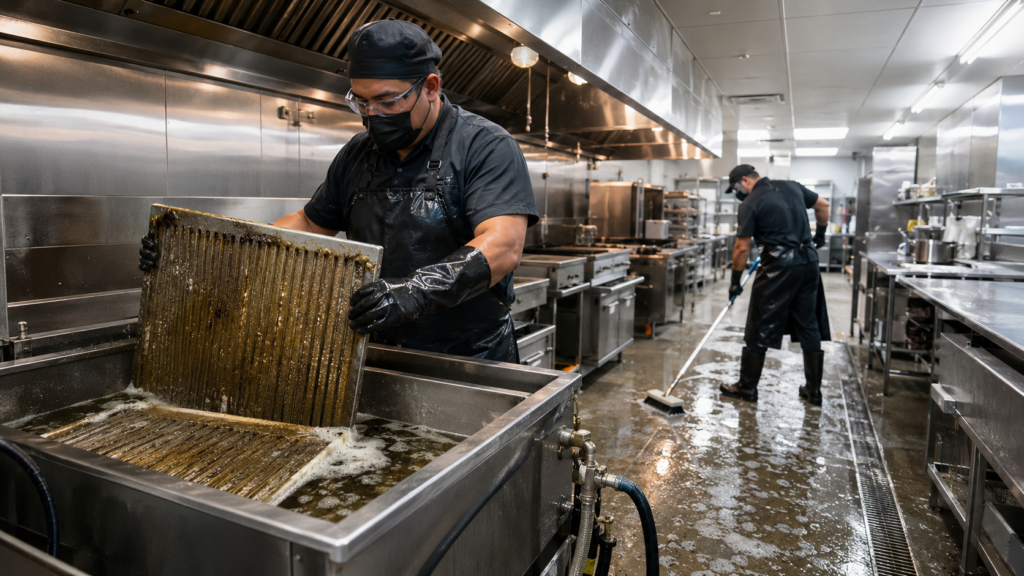
It is 11:30 PM. The last guests have departed, the kitchen staff has clocked out, and the facility transitions from revenue generation to structural maintenance. This specific window of time dictates the operational baseline for the following day.
In the commercial restaurant sector, a Monthly Cleaning Service does not mean a crew visits once every thirty days. It refers to the billing structure of a comprehensive, seven-day-a-week nightly operational contract. This distinction is critical for high-volume, multi-level dining establishments where daily degradation rapidly outpaces basic maintenance. Understanding the anatomy of this nightly reset is essential for operators who need to mitigate fire risks, eliminate biological hazards, and ensure continuous regulatory compliance.
The Limits of Surface-Level Janitorial
Many facility managers evaluate nightly cleaning based on visual surface readiness. The assumption is that if the floors are swept and the prep tables are wiped, the facility is clean. This perspective fundamentally misunderstands the physical reality of a commercial kitchen environment.
Surface-level janitorial only addresses visible debris and fresh spills. It completely ignores the aerosolized fats, microscopic food particles, and organic residues that settle continuously during peak service hours. When a nightly contract lacks structural depth, the facility accumulates hidden liabilities. The daily wipe-down merely redistributes these microscopic contaminants, creating a false sense of security while the structural environment quietly degrades.
A true operational reset requires moving beyond surface aesthetics to address the chemical and biological realities of a high-volume kitchen.
Exhaust Systems and Fire Code Compliance
The commercial exhaust system is the primary fire risk in any cooking environment. During service, aerosolized grease is pulled into the hood, where it condenses on the internal baffles and filters. If this grease is not removed daily, it polymerizes into a highly flammable carbon substance.
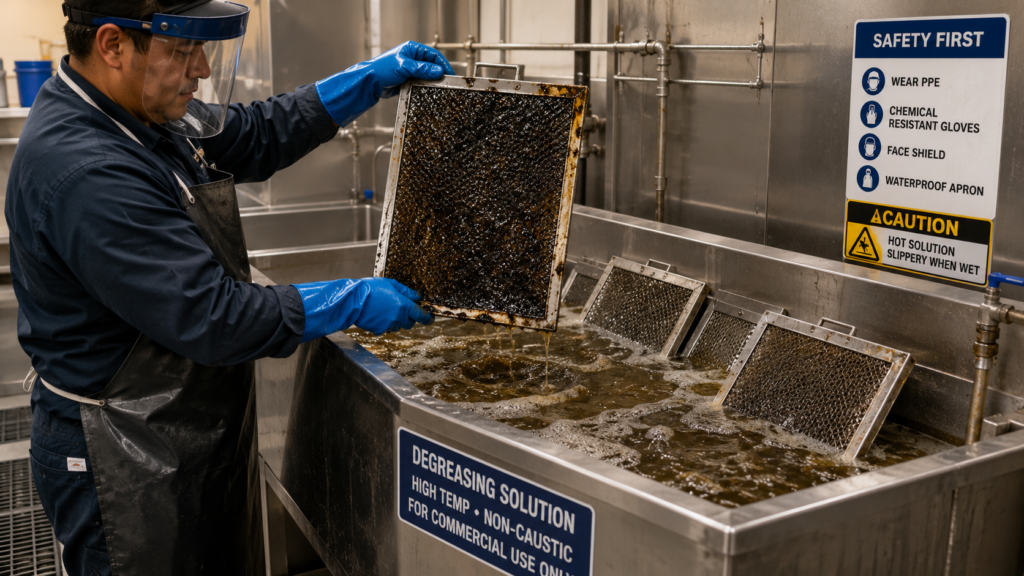
A comprehensive nightly contract mandates the systematic removal of hood filters. These filters must be soaked in hot water with specialized degreasers to break down the cured grease. Furthermore, the nightly protocol requires cleaning the fire protection systems of the hoods and degreasing the interior and exterior surfaces.
Skipping these specific tasks allows polymerized grease to accumulate in the plenum and on the roof. This creates a severe fire hazard and an immediate failure point for fire marshals. Professional nightly crews understand that exhaust maintenance is not a periodic project, but a daily structural necessity.
Floor Drains, Biofilm, and the Enzyme Protocol
Floor drains in the Back of House and bar areas constantly receive organic waste, dissolved sugars, and fine particulate matter. Standard mopping does nothing to clean the interior of the drain pipes or the traps below the grate.
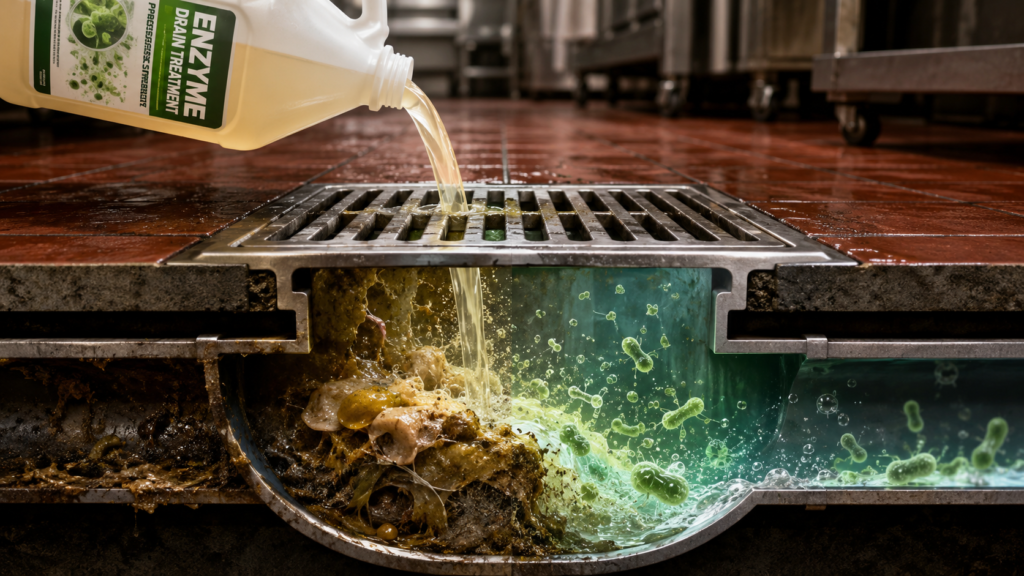
Over time, this organic matter forms a thick, sticky biofilm inside the plumbing. This biofilm is the primary food source for drain flies and produces persistent, sour odors that permeate the facility. Health inspectors specifically target these odors as indicators of biological decay.
A proper nightly standard operating procedure requires dumping all physical debris from the floor drains. More importantly, it requires washing the drains with specific enzyme cleaners. These biological agents consume the organic buildup inside the pipes, eliminating the biofilm at the source. This nightly chemical intervention prevents pest harborage and maintains the sanitary integrity of the facility plumbing.
Traffic Walls and Equipment Exteriors
Aerosolized grease and food splatter do not stay confined to the cooking surfaces. Air currents carry these particles outward, settling on walls, baseboards, and the exteriors of heavy equipment.
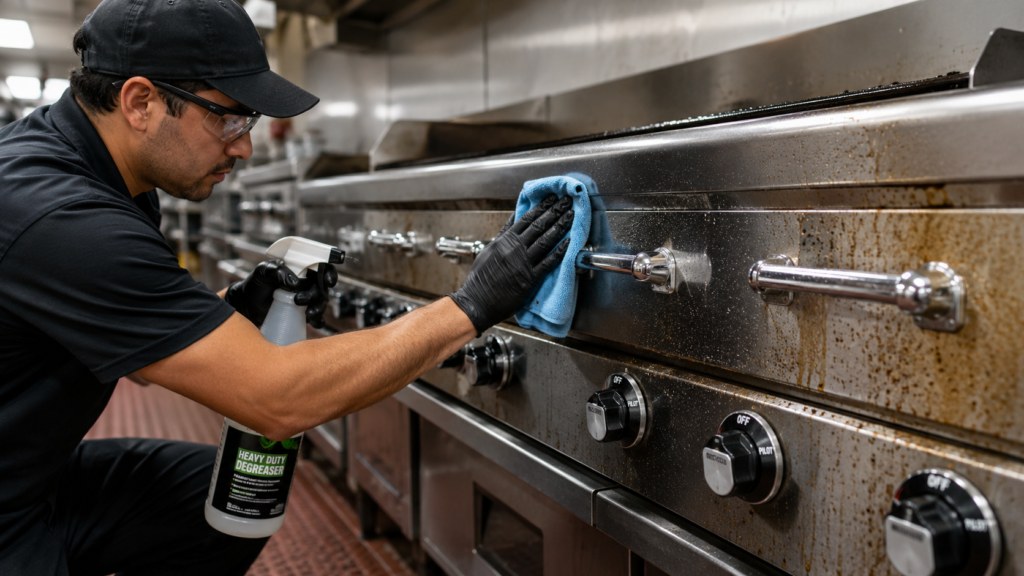
A comprehensive nightly contract mandates the detailed wiping of all traffic walls up to six feet using commercial degreaser. This specific height restriction targets the exact zone where splatter and airborne grease accumulate most heavily.
Additionally, the protocol requires degreasing the exteriors of all main line equipment, including handles, stove grates, and oven doors. Cleaning the exterior of the equipment prevents cross-contamination and ensures the physical environment meets the strict visual and sanitary expectations of health department inspectors. When these details are missed, the facility develops a persistent, dull film that signals systemic neglect.
The Necessity of Supervised Continuity
Executing this level of detail across a complex, multi-level facility cannot rely on unsupervised task execution. A seven-day-a-week operation requires a dedicated supervisor managing a team of technicians.
The supervisor ensures that critical safety checks are performed before cleaning begins. They verify that anti-fatigue mats are properly removed, degreased, brushed, and allowed to dry before being replaced. They manage the transition between Back of House degreasing and Front of House aesthetic preservation, ensuring that chemical agents are not cross-contaminated between zones.
This supervised continuity prevents the operational gaps that lead to compliance failures. It transforms the nightly cleaning process from a disjointed collection of chores into a highly engineered, repeatable operational reset.
Aligning Nightly Execution with Long-Term Compliance
Operational degradation in a commercial kitchen is rarely the result of a single catastrophic event. It is the accumulation of missed nightly details. A facility does not fail a fire inspection because of one missed shift. It fails because of months of deferred exhaust maintenance, where polymerized grease is allowed to accumulate beyond the reach of standard daily tools.
Recognizing the structural limits of basic janitorial is the first step in protecting your physical investment and your operational license. Implementing a comprehensive, seven-day-a-week nightly contract transitions your facility management from a reactive posture to a proactive strategy. This ensures the environment remains operationally reset, compliant, and structurally maintained for every single service period.
If you are reviewing your current nightly cleaning specifications to ensure they meet the structural demands of your facility, we can help you evaluate your operational baseline. Contact New Revolution Cleaning to discuss your maintenance structure and develop a compliant, supervised nightly protocol for your restaurant.